travel

China Elevator Stories

Fuchenghuang Temple, Lanzhou (China Travel)

Lanzhou featured a New Year’s calligraphy exhibit at Fuchenghuang Temple before Spring Festival 2026.

08/05/2026

Ruth Silbermayr
Ruth Silbermayr

Author
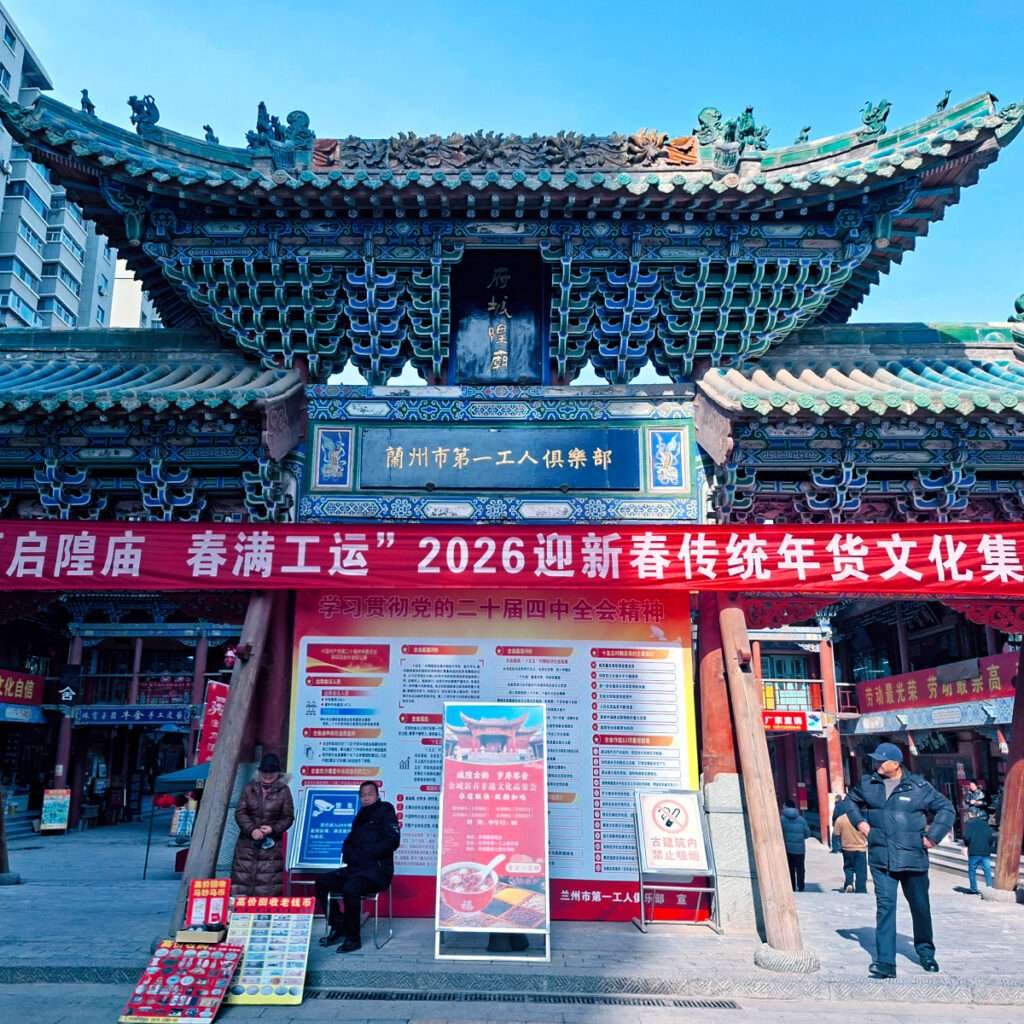
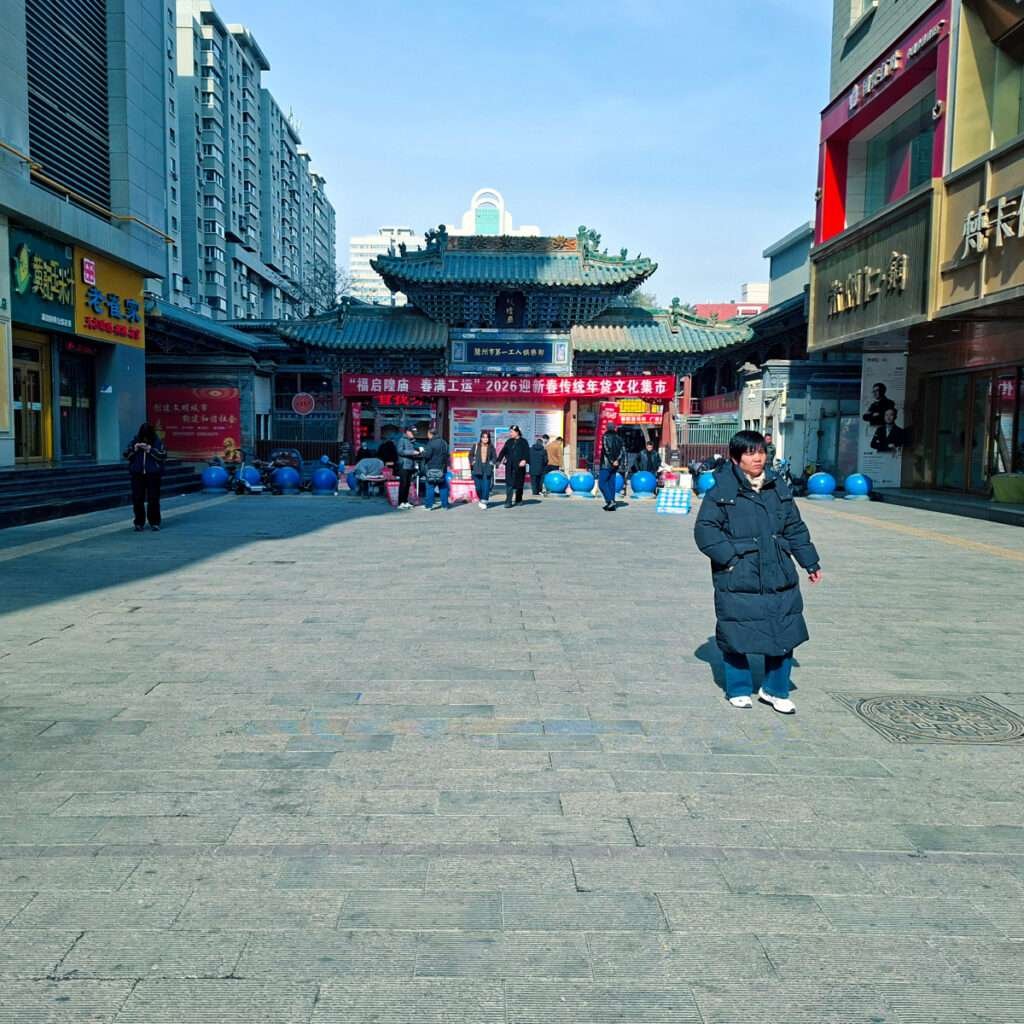
Ornate Chinese temple gate with blue-green tiles and decorative roof, a large red banner in front advertising a 2026 cultural event, and people selling posters nearby.

I came across Fuchenghuang Temple (府城隍庙) coincidentally, since it was located near my hostel and I walked by it on the morning of the day I spent there.

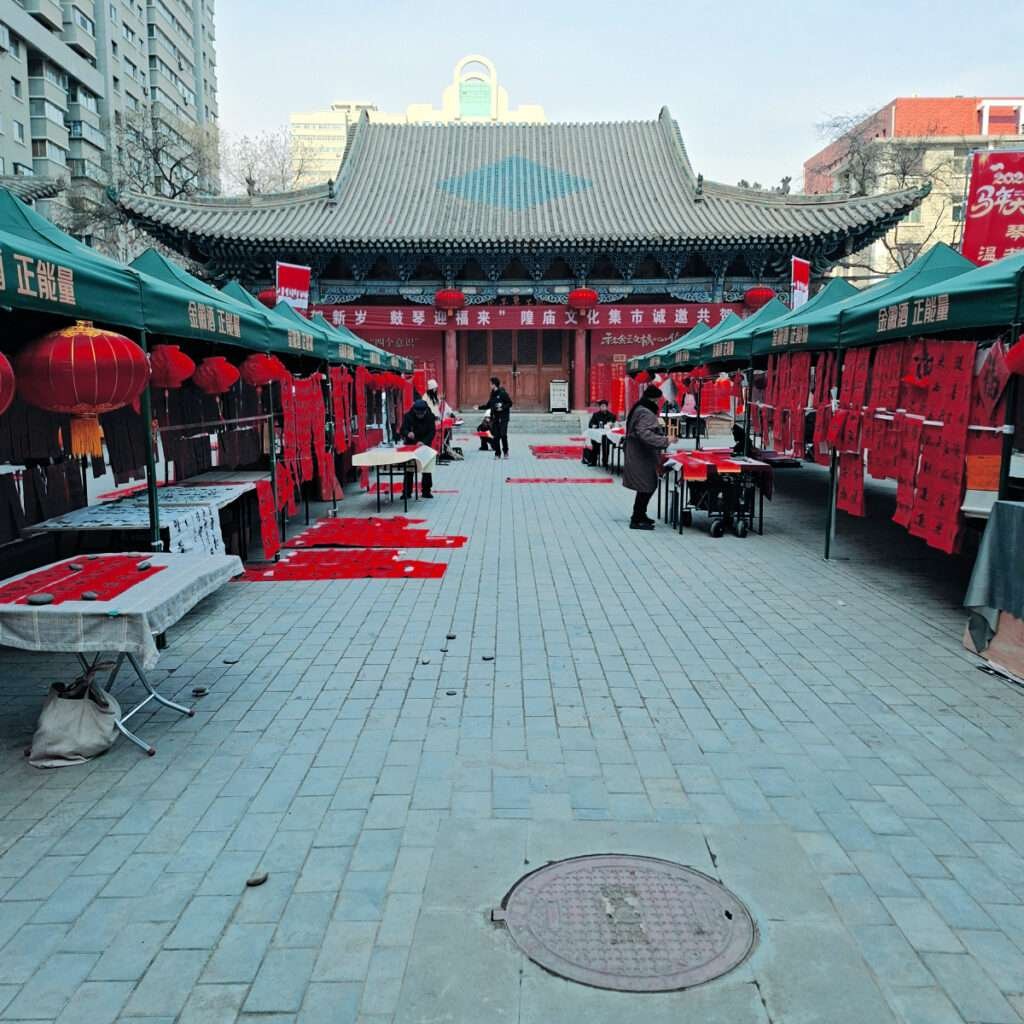
Wide pedestrian street toward a traditional Chinese gate with green tiled roof, red banners, and market stalls in a busy plaza.

I visited other sights first but went back to see what it was like inside before taking my train back to Northeast China.

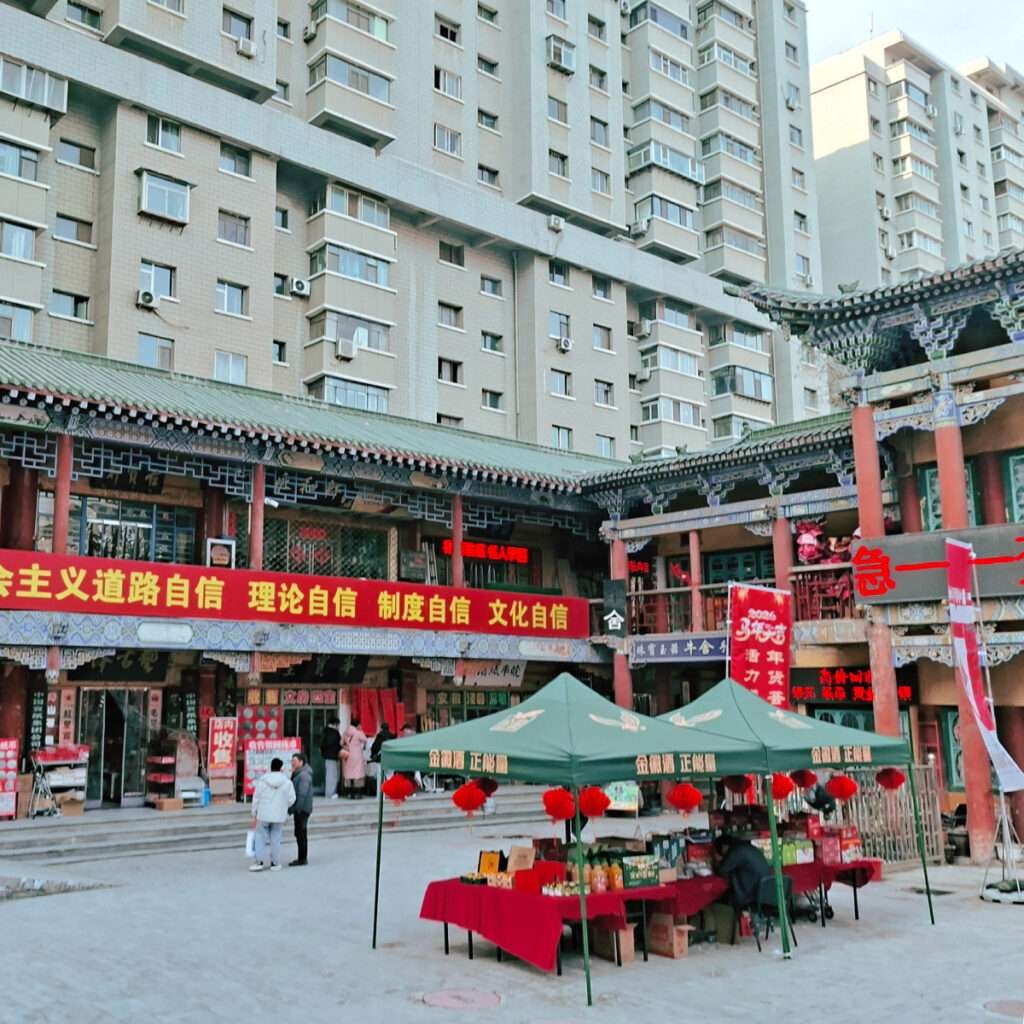
A bustling outdoor market in a Chinese plaza with red banners, vendors under green canopies, and high-rise apartment buildings behind.

It is located on Zhangye Road in Lanzhou and can be combined with a walk along the Yellow River, as well as a visit to the nearby shopping street, which features shops that sell local specialties such as beef cooked with spices in soy sauce (which can be bought by the pound and is a Hui specialty), and Hui lamian (similar to ramen), the noodle soup that is known across the country as originating from Lanzhou.

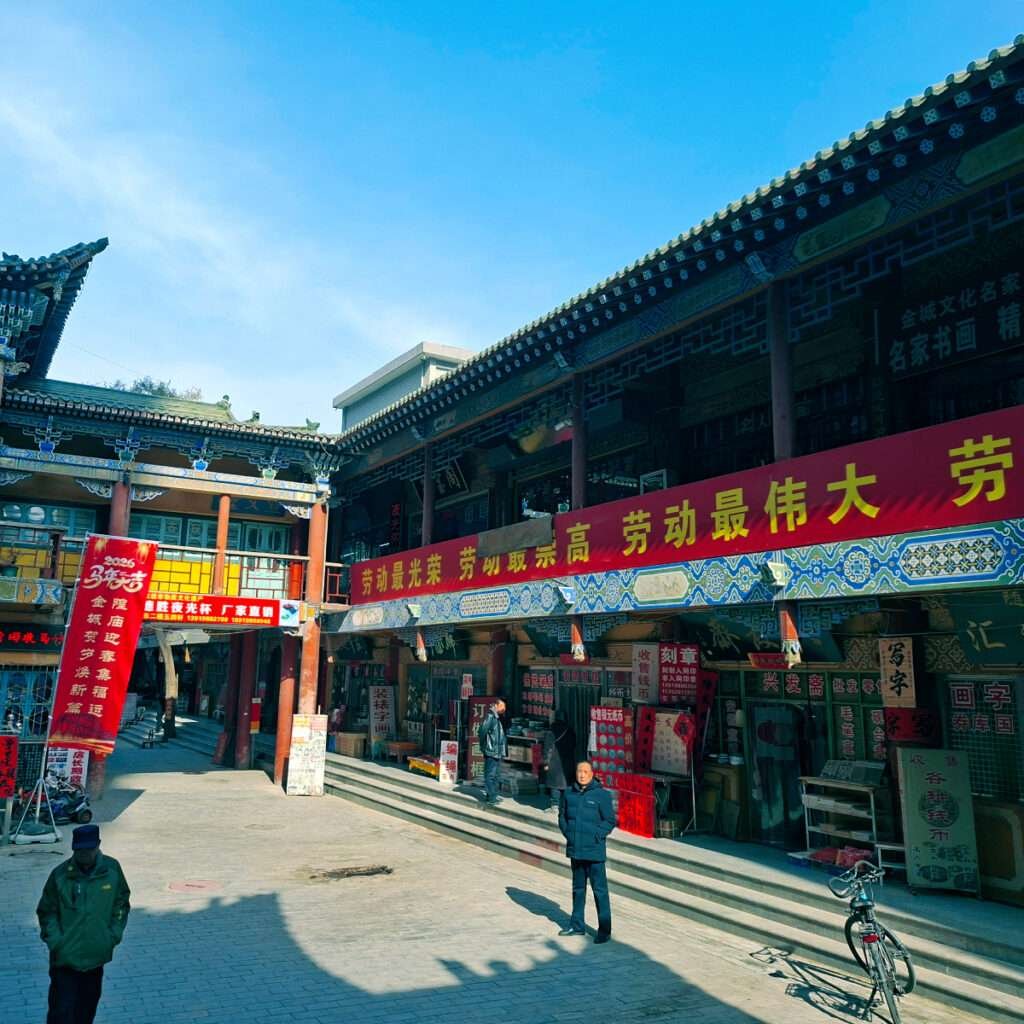
A covered market street with traditional Chinese architecture, red banners with yellow Chinese characters, and small shops along the walkway under a bright blue sky.

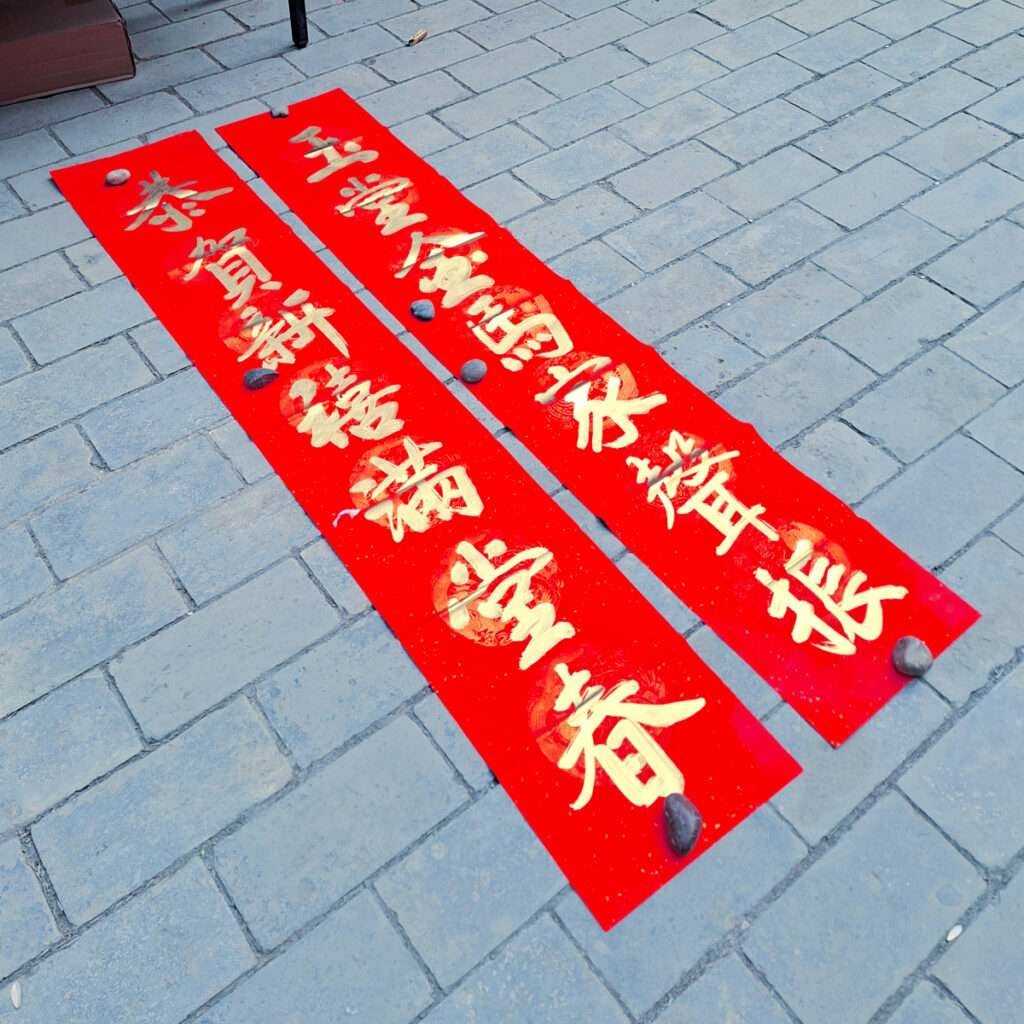
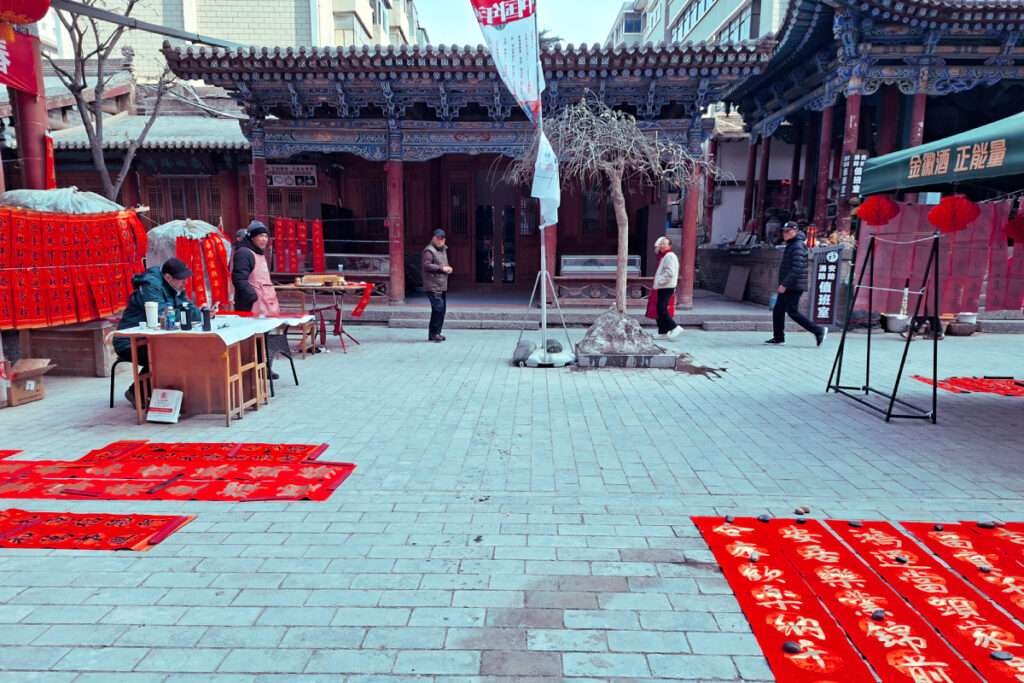
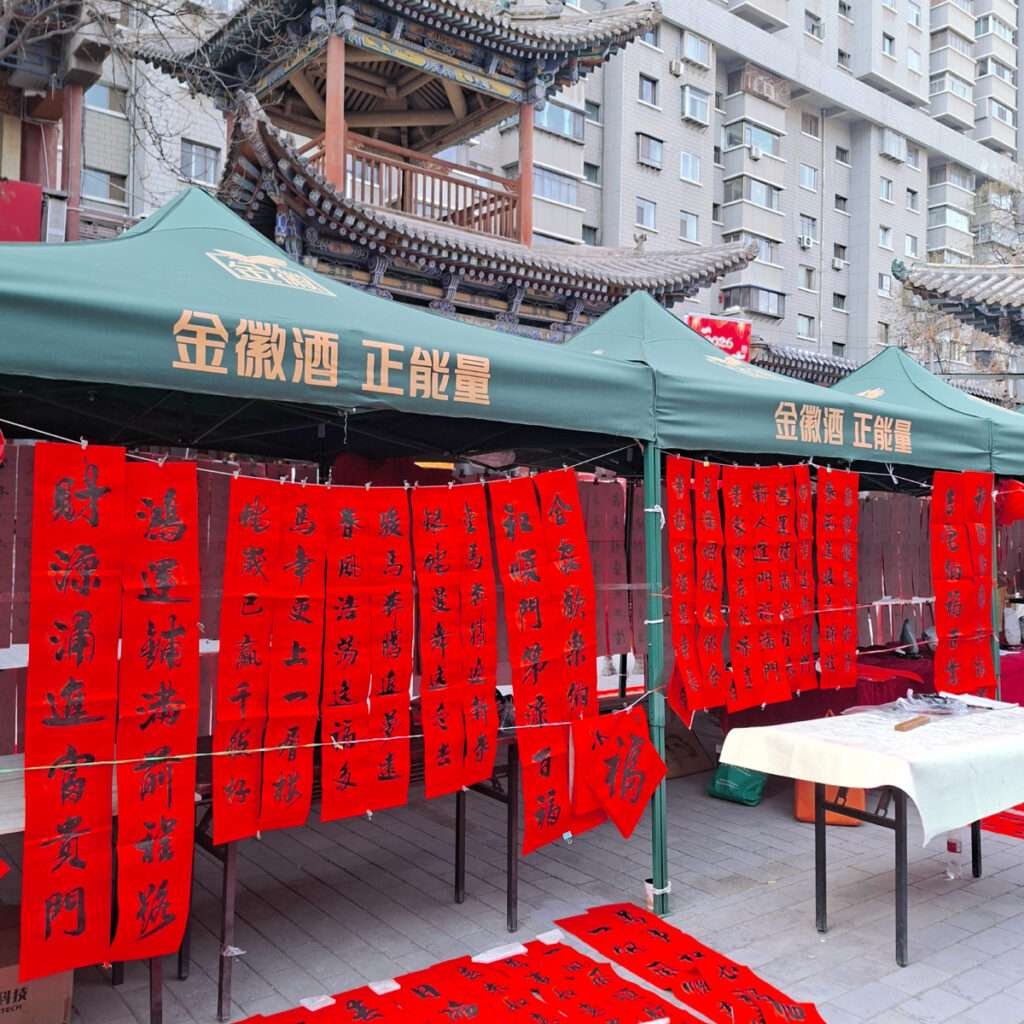
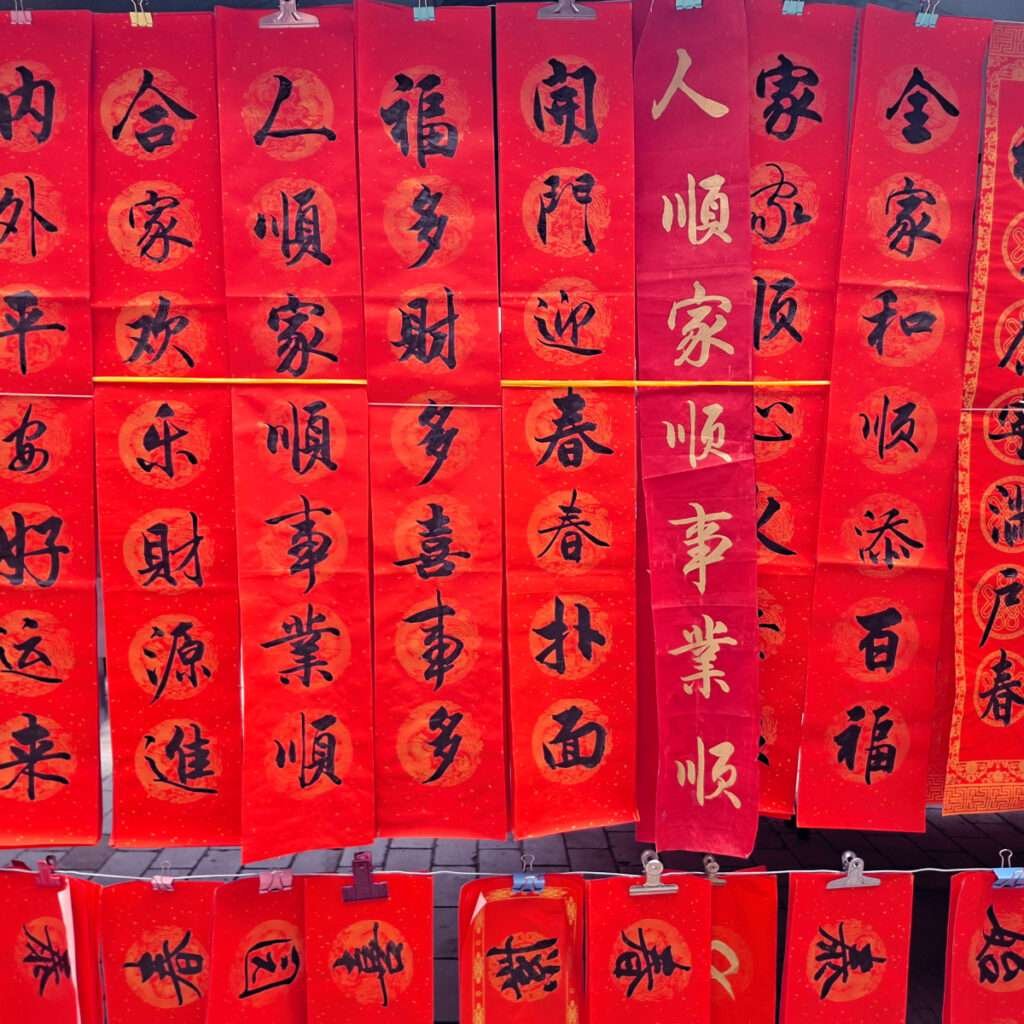
Since it was shortly before the Spring Festival, it featured a kind of exhibition of chunlian (春联), where calligraphers sold New Year’s decorations—the couplets featuring Chinese characters that are put up next to doors on New Year’s Eve across the country.

Two red vertical banners with gold Chinese writing laid on a gray brick sidewalk.

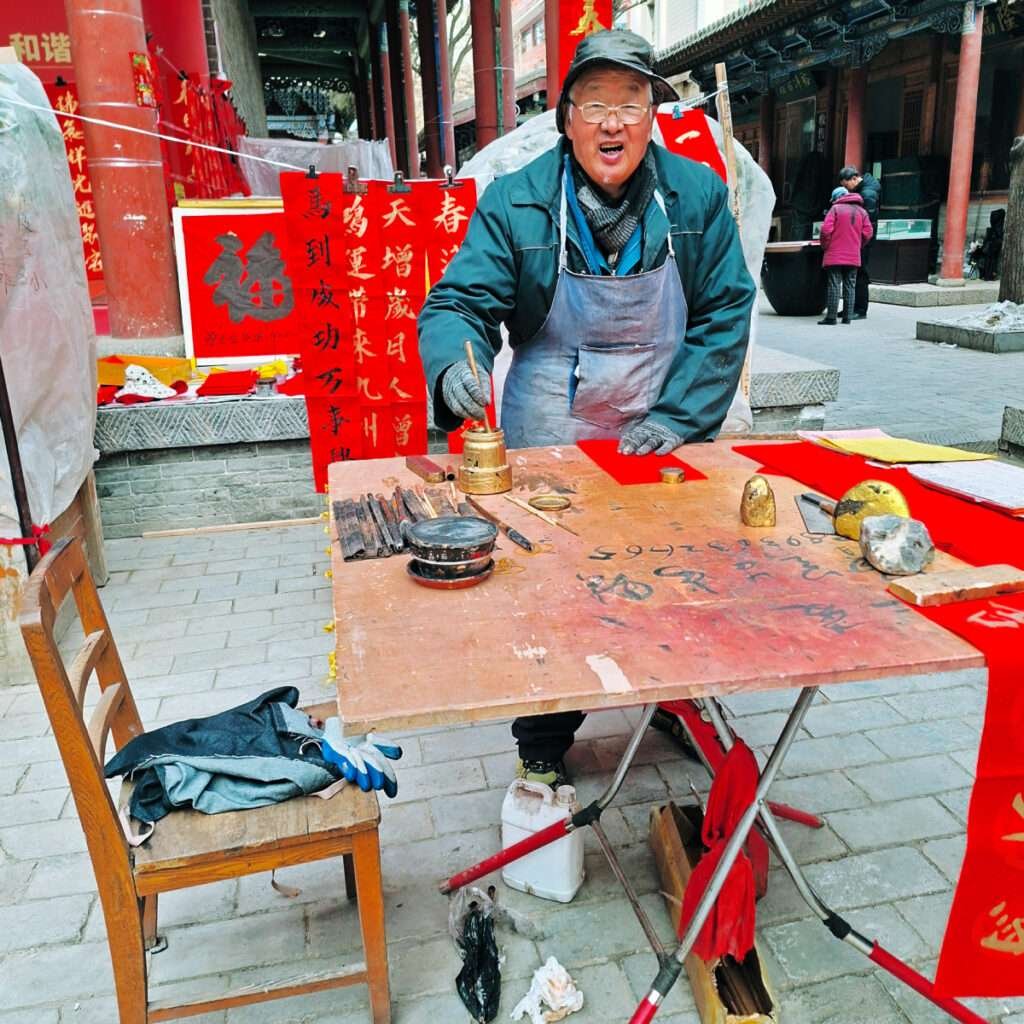
I enjoyed watching calligraphers produce their artworks on the ground—visitors could watch them as they skillfully created their calligraphy and then buy the finished couplets (called 对联, duilian in Chinese).

Temple courtyard with ornate wooden eaves, red banners on the ground, and people at a table setup under the gateway.

Chinese calligraphy is an art form still practiced in many households in China, and many elderly people, often men but sometimes also women, consider it a hobby they pursue in retirement.

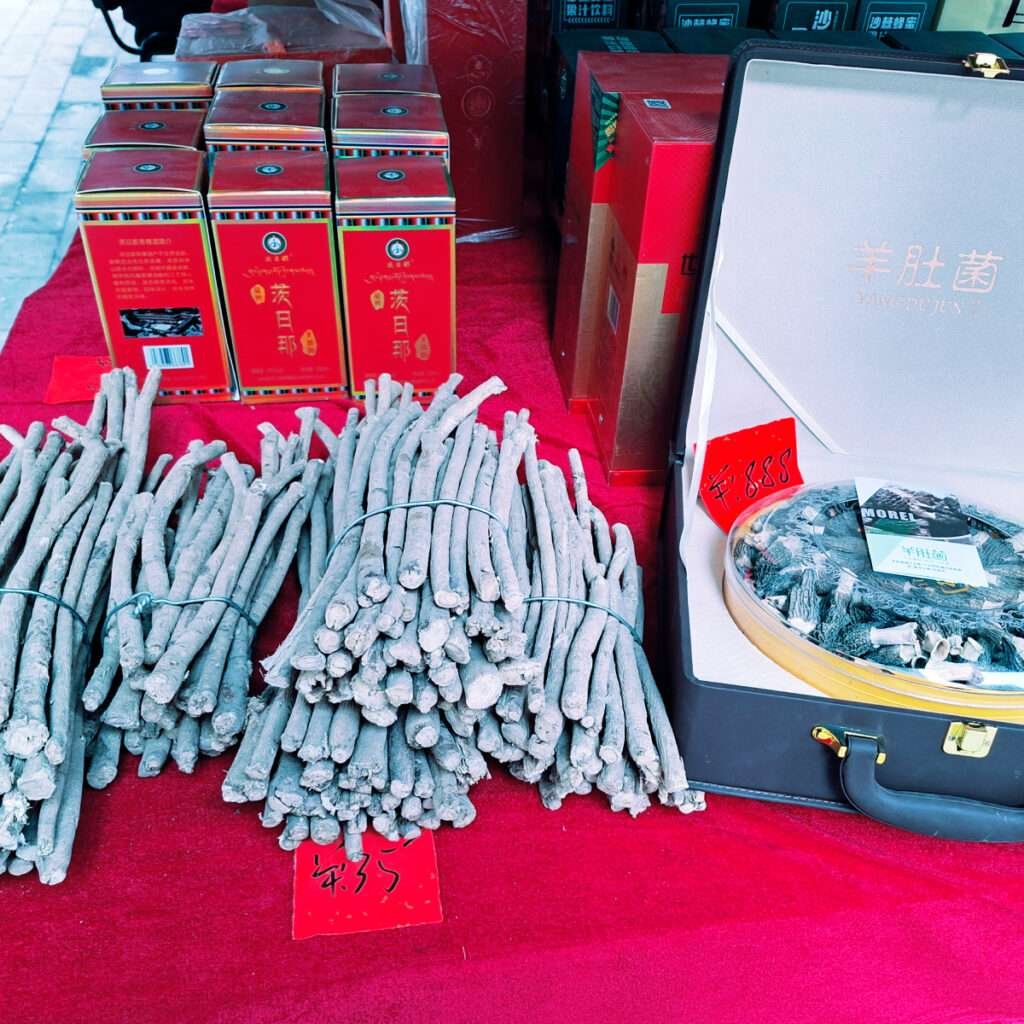
Bundles of gray incense sticks tied with string, displayed on a red cloth with red boxes and an open case nearby in a market stall

Chinese calligraphy is a few thousand years old, as it developed during the Shang Dynasty (1600–1046 BCE). There are a few main styles. These include:

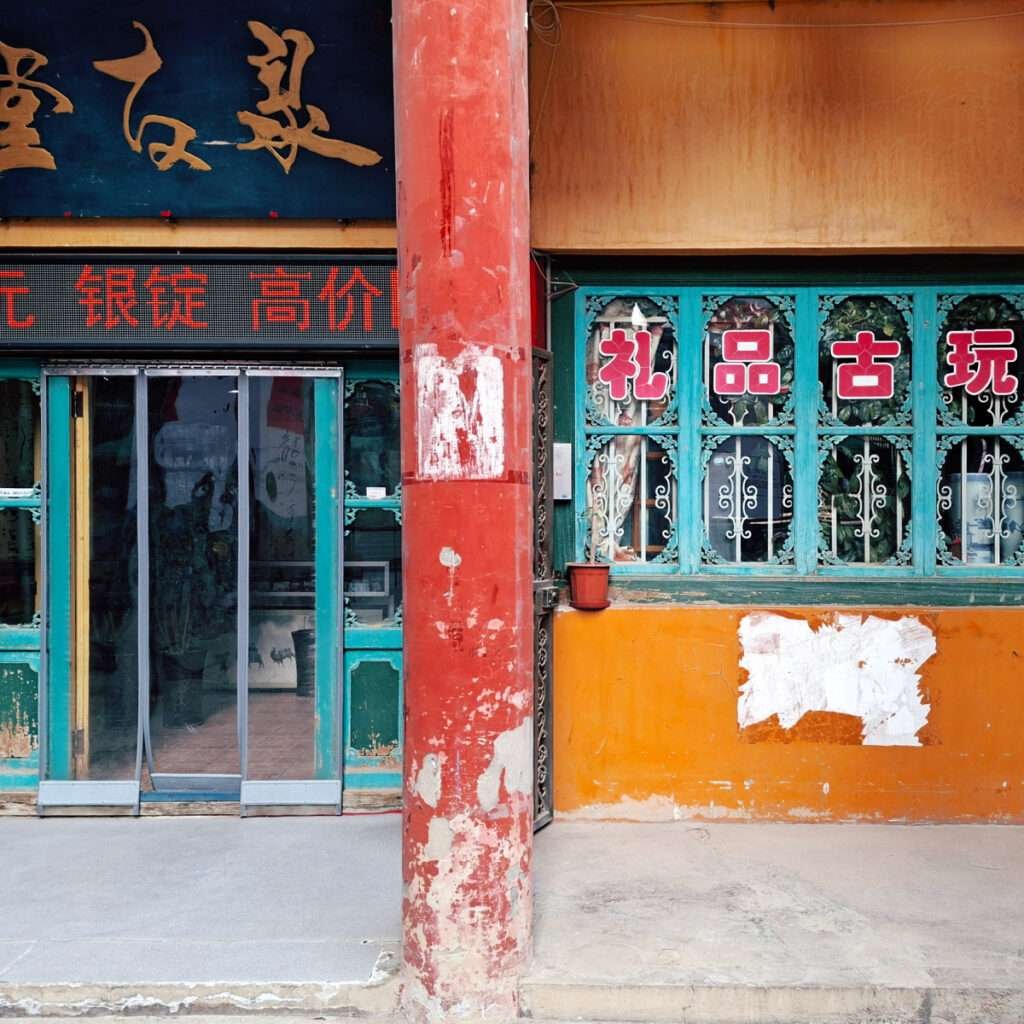
Colorful storefront with turquoise ornate window frames, orange wall, and a weathered red pillar in the foreground; Chinese characters on signs and a glass door storefront visible in the background.
  • Seal Script (篆书 zhuanshu): This script is also described as a “decorative encoding script” and can be found on ancient seals and stamps.
  • Clerical Script (隶书 lishu): This calligraphy style uses flatter and wider strokes and was used in official writing in early imperial China.
  • Regular Script (楷书 kaishu): This is the most standard and readable form and what many students who learn calligraphy study first.
  • Running Script (行书 xingshu): This script features a semi-cursive style and is more fluid and expressive but still readable.
  • Cursive Script (草书 caoshu): This calligraphy style is highly stylized and abstract and often difficult to read. It is more focused on artistic expression than readability and is often used today.
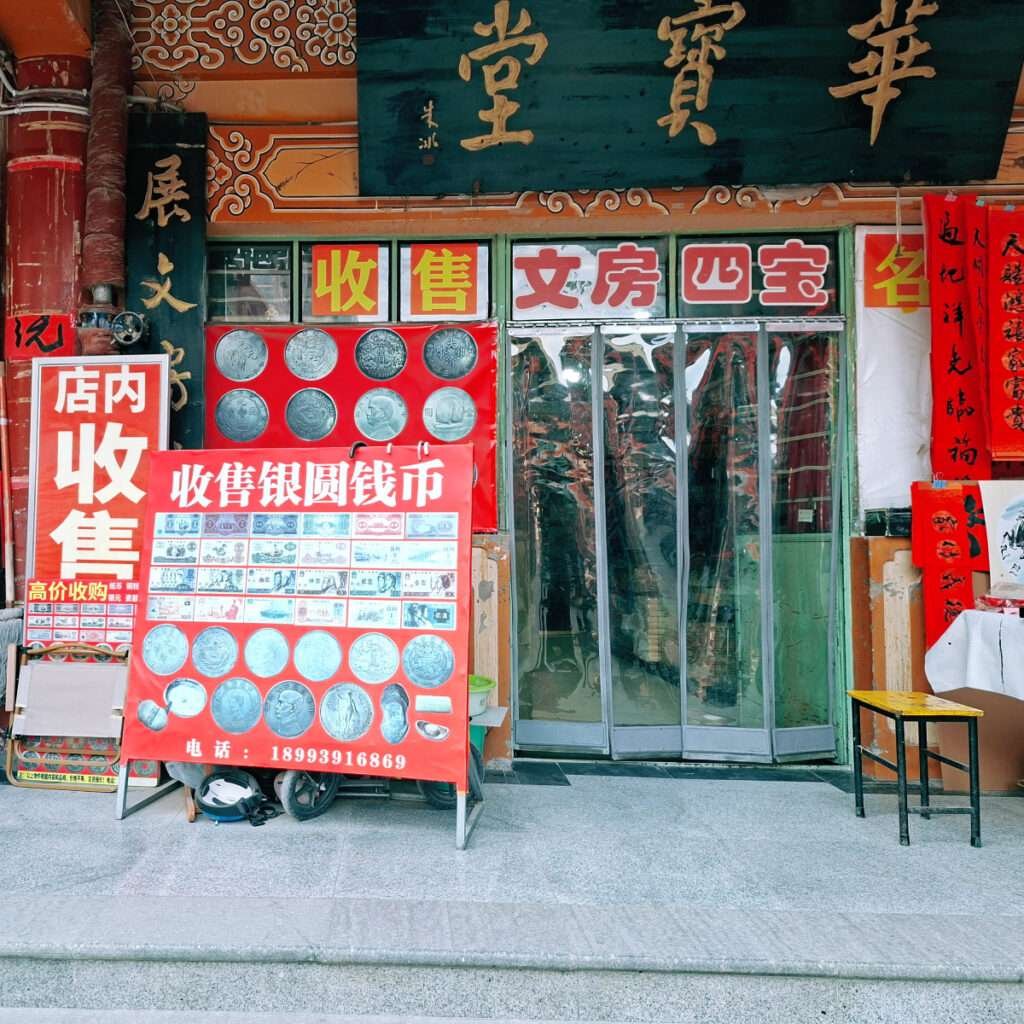
Shopfront with red signboards advertising coin collection and currency exchange; display board shows coins, Chinese characters on signs, and glass doors at entry.

In addition to there being different styles, there are also different ways of practicing calligraphy. These include:

Outdoor market with green tents and red decorations in front of a traditional Chinese temple; red lanterns and banners abound, creating a festive scene.
  • Brush Calligraphy (毛笔书法): This is the most well-known way of creating calligraphy, where characters are drawn on paper using a brush, usually with black or golden ink.
  • Hard Pen Calligraphy (硬笔书法): This is a lesser well-known way, where calligraphy is created using pens or pencils.
  • Sand or Water Calligraphy (地书 or 水书): This kind of calligraphy is used for meditation and as a mindfulness practice. It is usually practiced outdoors, often on the ground using water or sand—and vanishes when the wind comes or when it rains. It is calligraphy that is meant as a meditative exercise, not for creating lasting art that can be put up on a wall.
  • Finger Calligraphy (指书): This is a lesser well-known way of creating calligraphy, where a person uses their fingers to write characters.
Green canopy with gold Chinese characters over a market stall; red vertical banners with black calligraphy for Lunar New Year decorations outside a building with traditional roofline.

Calligraphy can be found in many households across China, and especially people who are well-read, educated, and in higher government positions or similar roles enjoy displaying such artwork in their offices or homes. It has decorative and cultural uses, such as in couplets, which are put up next to the door during the Spring Festival, a practice common across the country in most families. Scrolls and hanging calligraphy are often put up in homes and offices, especially if a person is educated and understands the value of calligraphy. Sometimes, calligraphy can also be found on objects such as fans, lanterns, or even on walls and in temples.

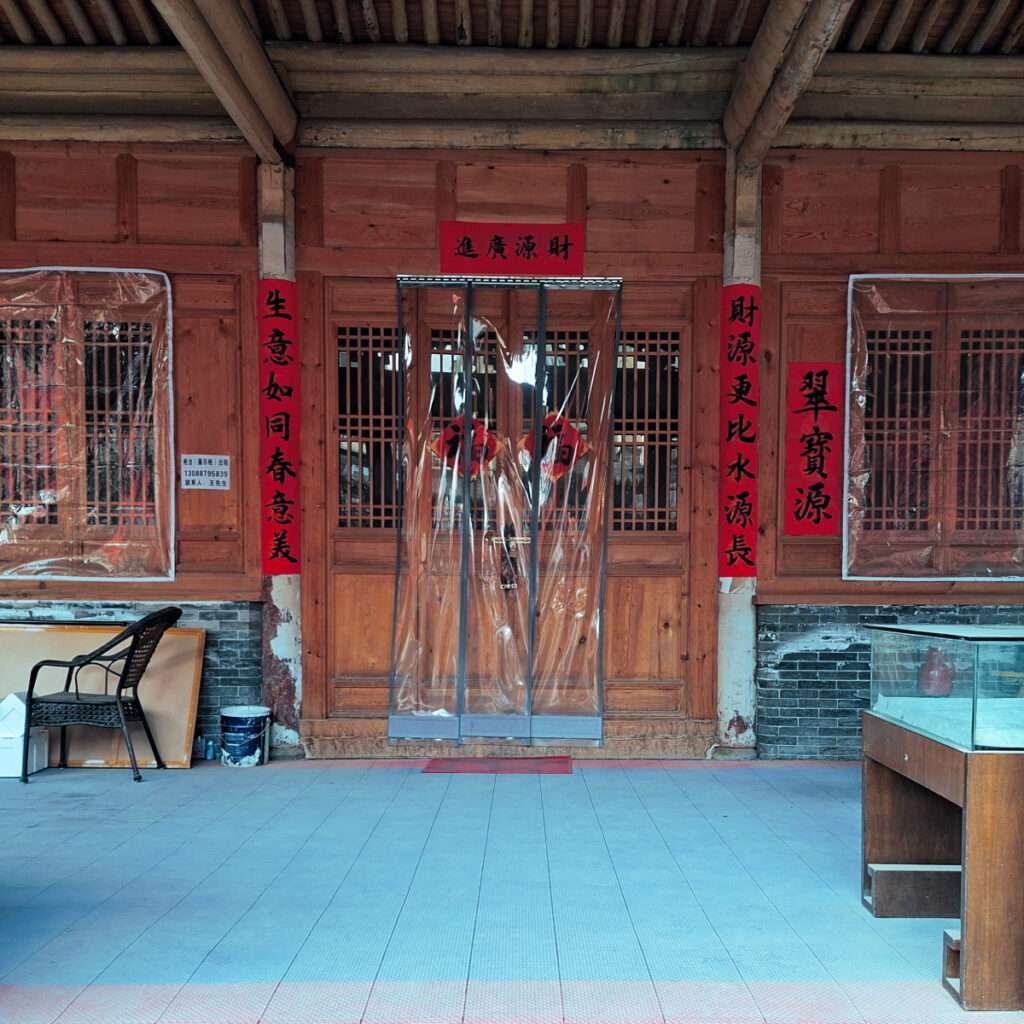
Wooden doorway with red couplets on either side, a clear plastic curtain in the entrance, and signs above and beside the door.

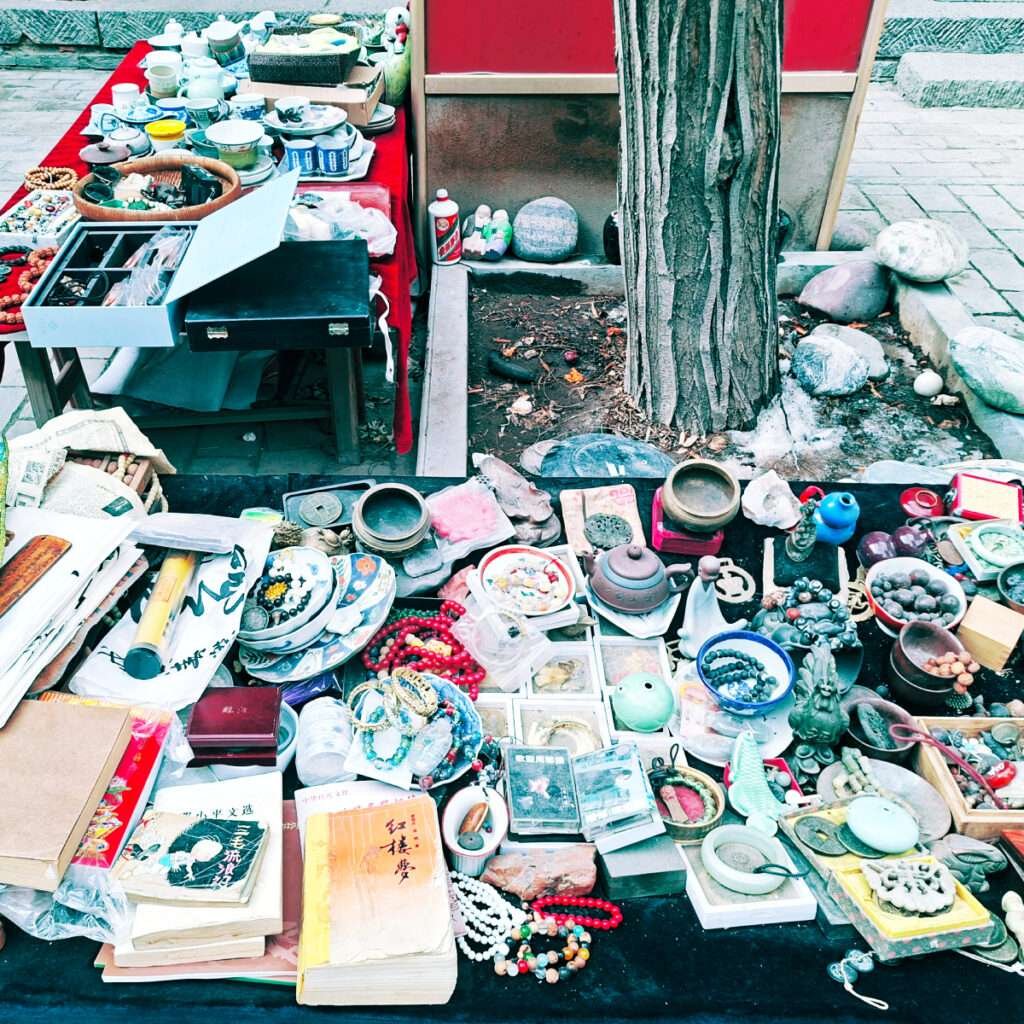
The temple also featured a few stores selling souvenirs or other items that could be given as gifts, many of them decorative. Some shops also sold second-hand items.

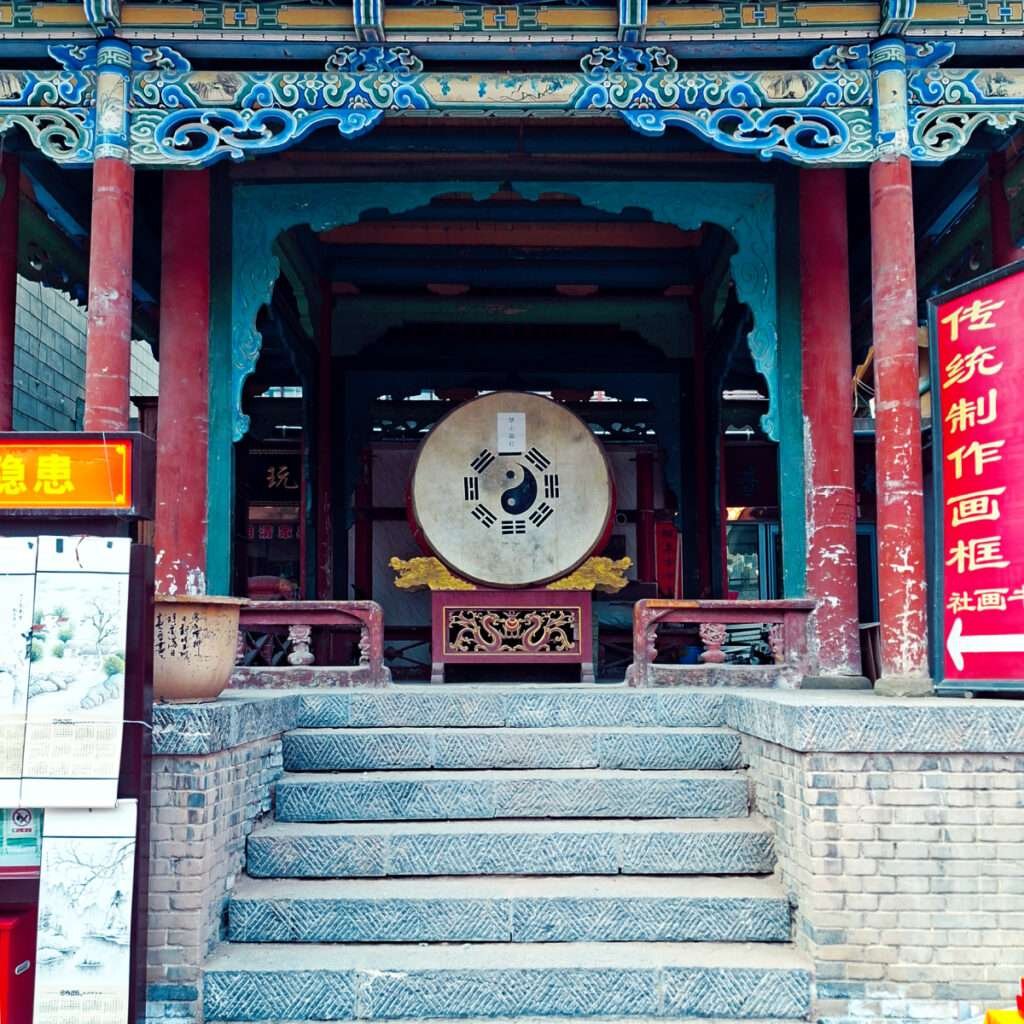
Front view of a traditional Chinese temple entrance with a large drum on a carved pedestal, red pillars, and blue ornate beams.

It didn’t truly have the function of being a temple anymore, but it still looked lovely, being situated among a few high-rises in a central area of the city.

Rows of red vertical banners with black Chinese calligraphy for Lunar New Year, hung in a market display

Here are a few more pictures:

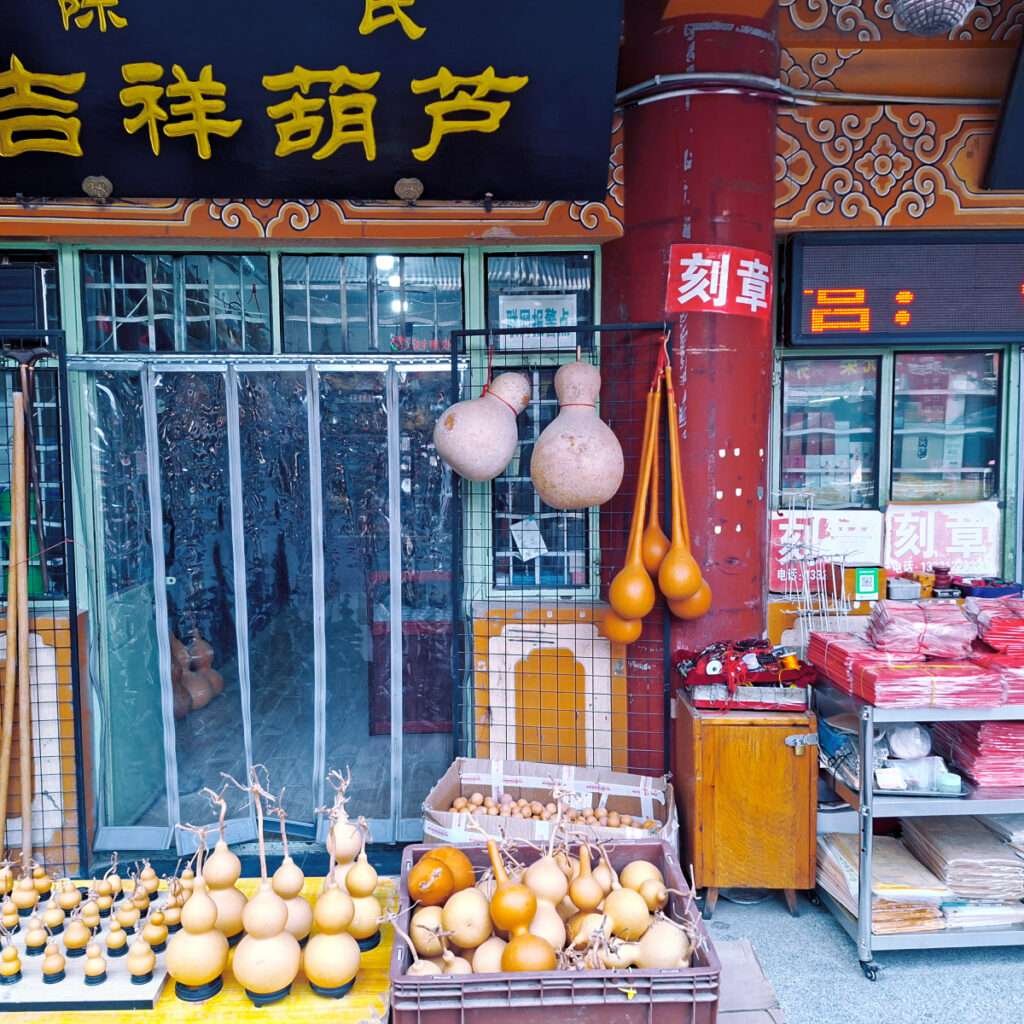
Shopfront with hanging gourds and crate of small gourds for sale, Chinese signage above.
Elderly man in a cap and apron writes with a brush at a street stall selling Chinese calligraphy banners; red papers, ink pots, and brushes on a wooden table.
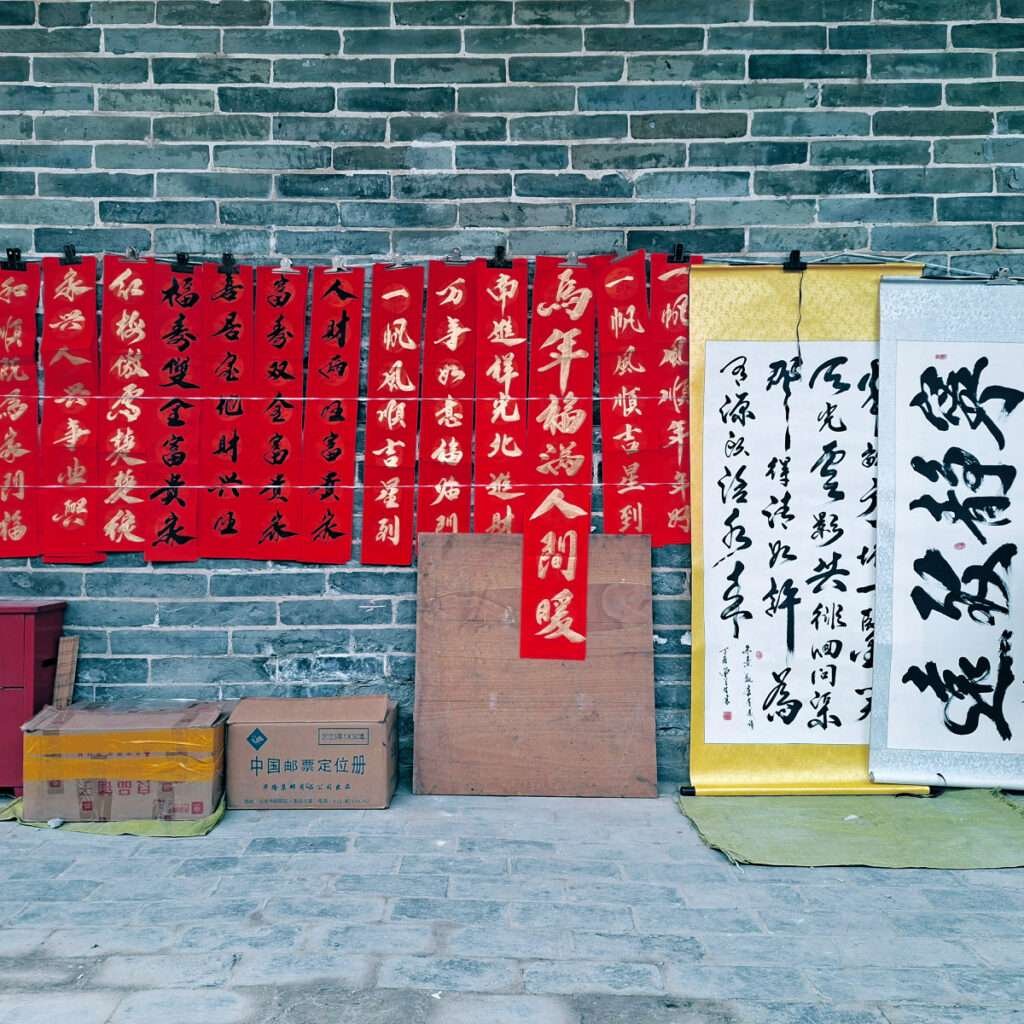
Red Chinese New Year banners with gold characters hung on a brick wall, with cardboard boxes on the ground.
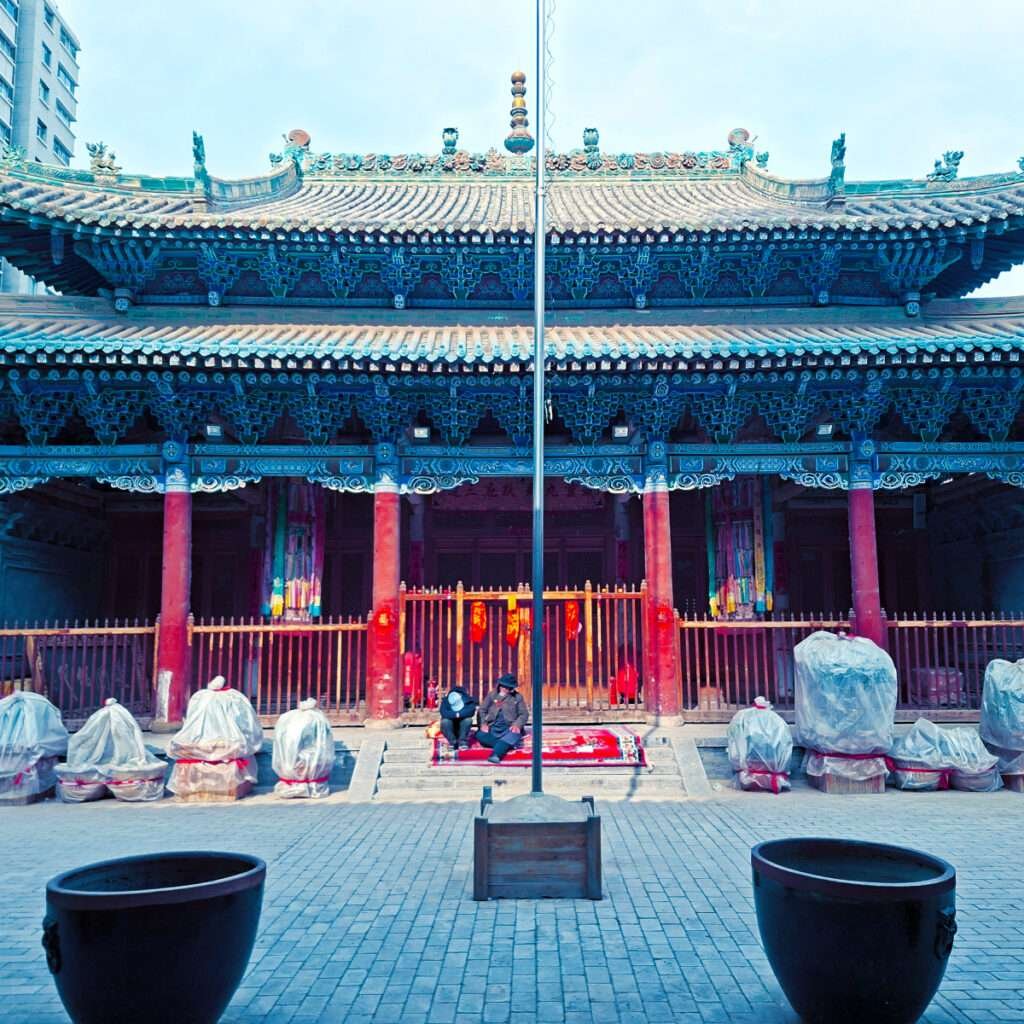
Two people sit on a red rug in front of a richly carved Chinese temple courtyard with blue beams and red columns under a decorative roof.”,
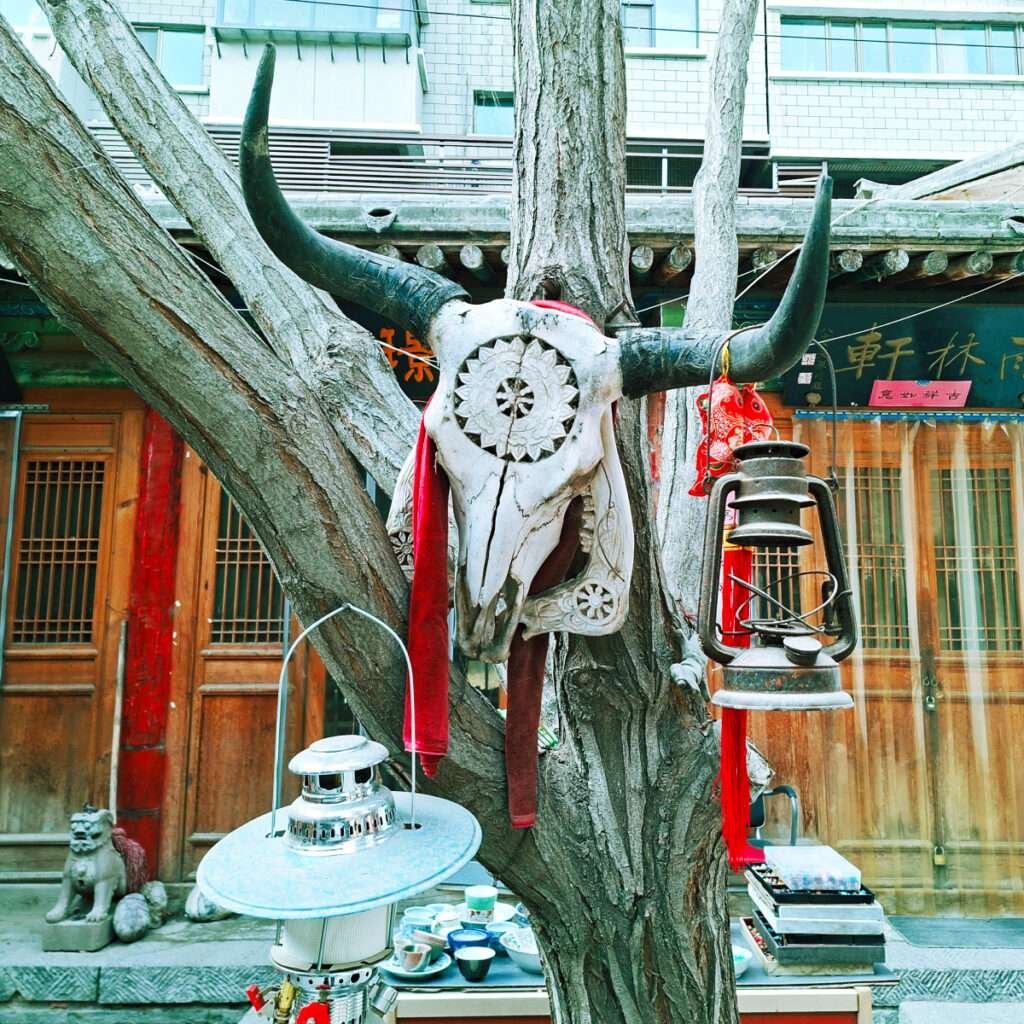
Animal skull with large horns mounted on a tree, red cloth draped, lantern hanging nearby, in front of a traditional storefront with Chinese signage.
Table of miscellaneous items at a street market: teaware, beads, stones, jewelry, books, and small sculptures.
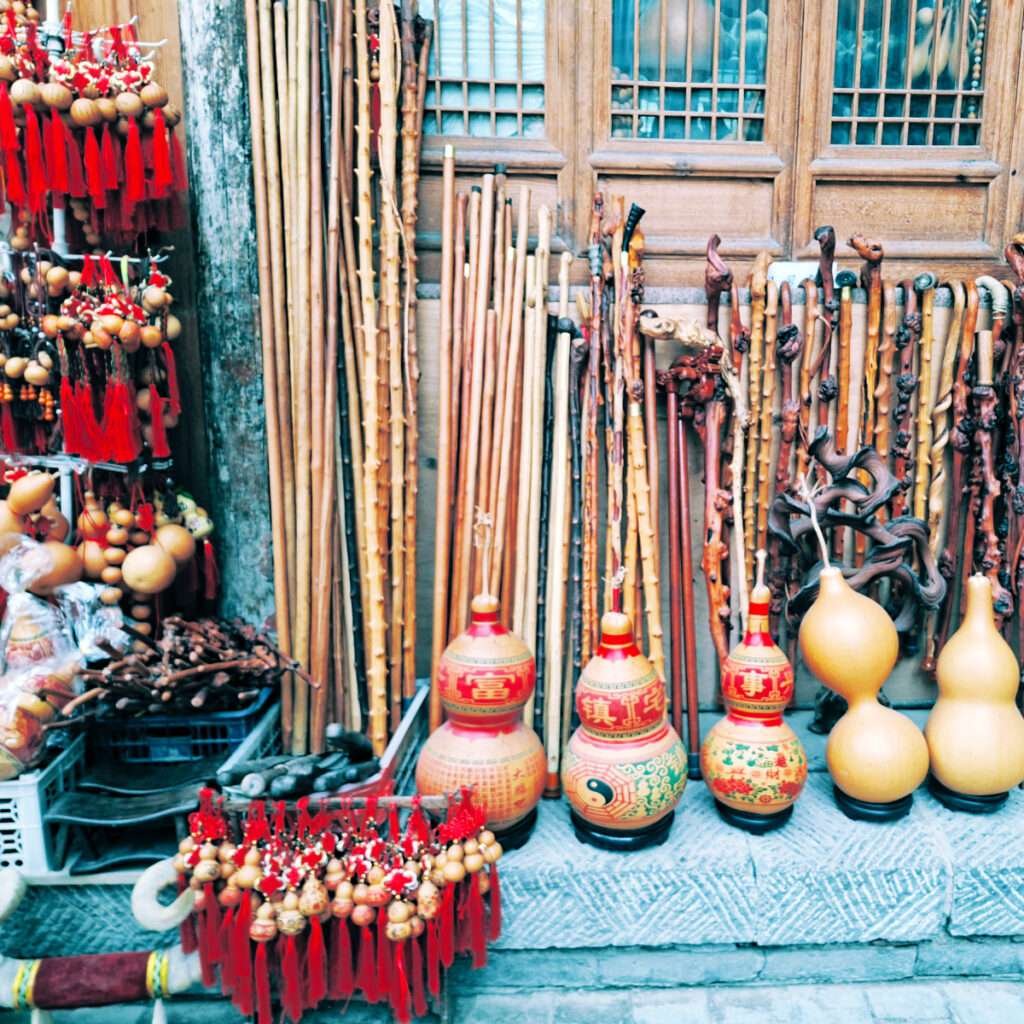
Street market stall displaying tall wooden canes and carved staffs with red tassels and traditional gourds on the ground.

Have you ever visited Lanzhou?

Follow me on:

Leave a Reply

Your email address will not be published. Required fields are marked *