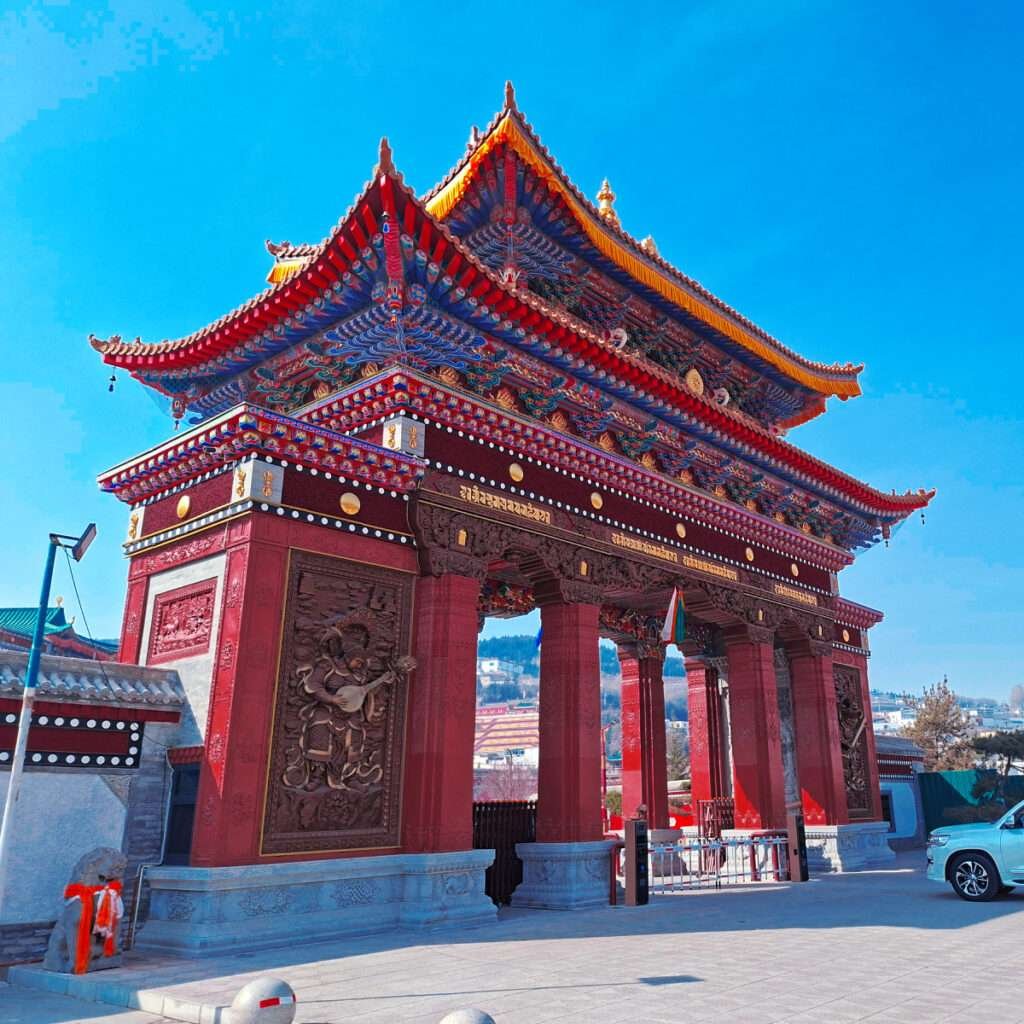
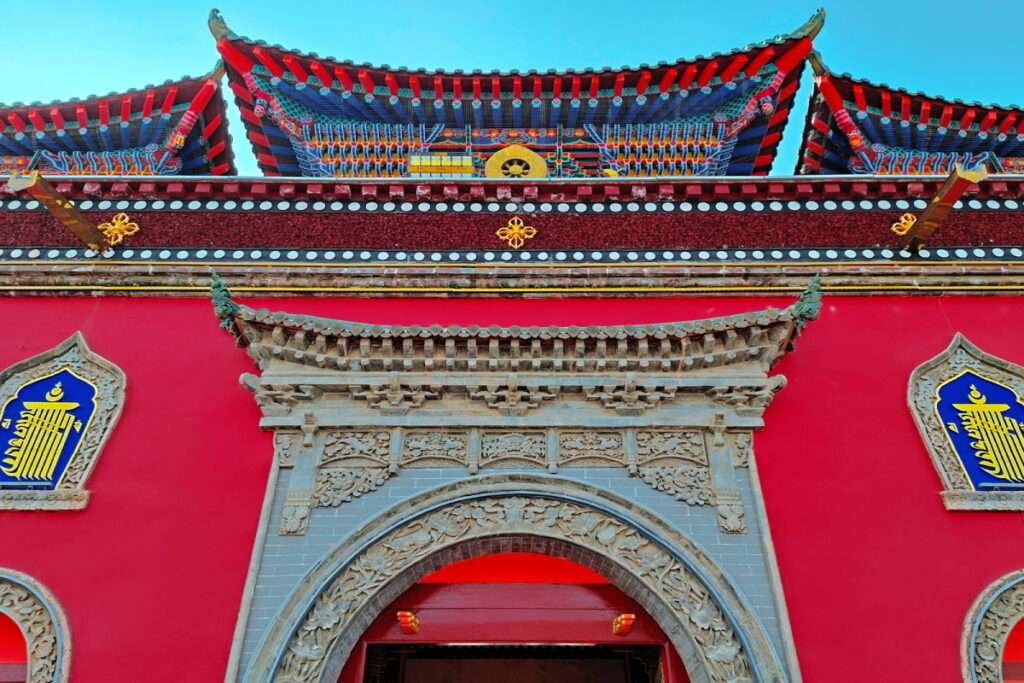
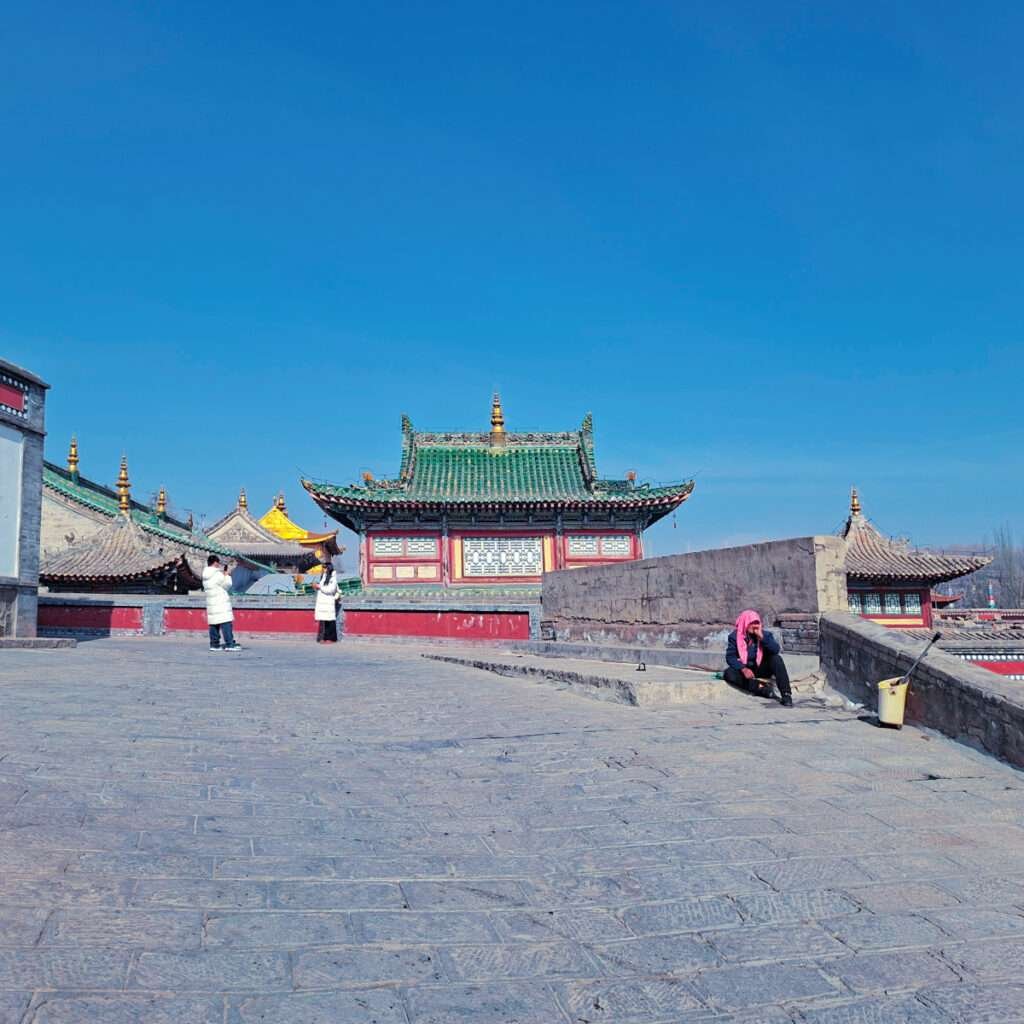
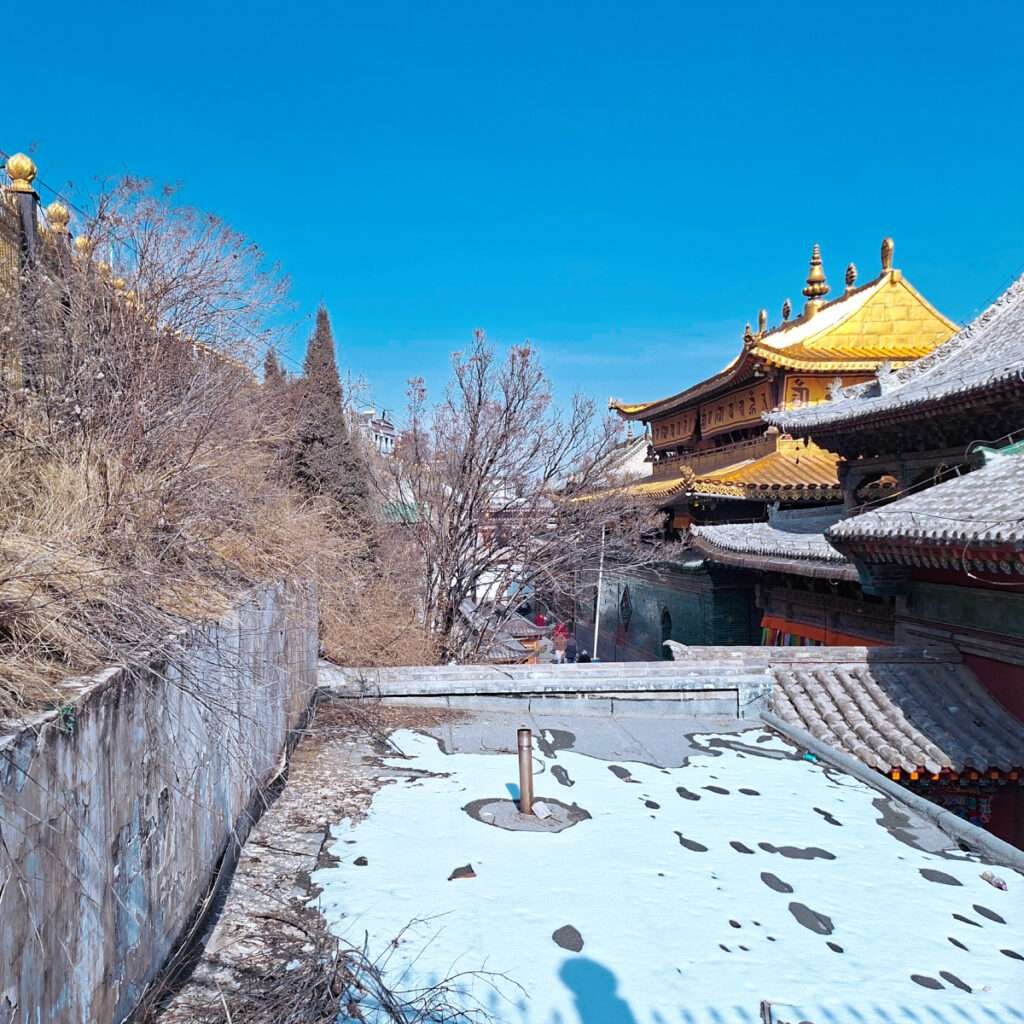
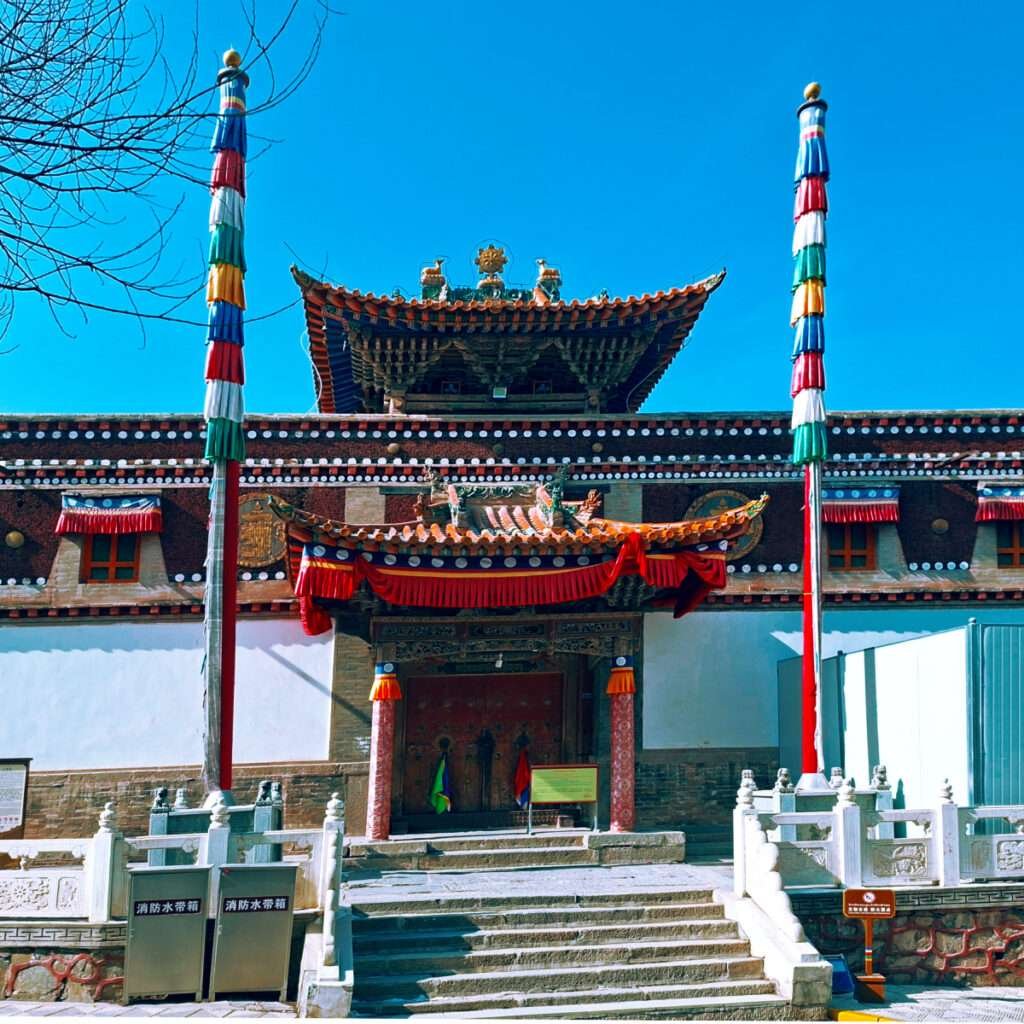
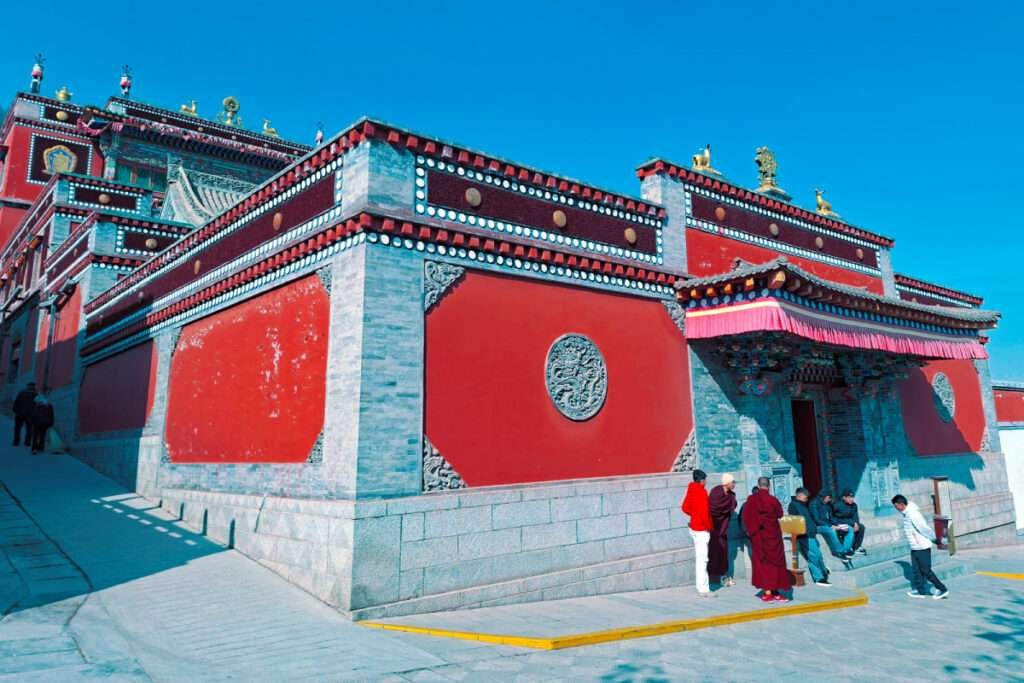
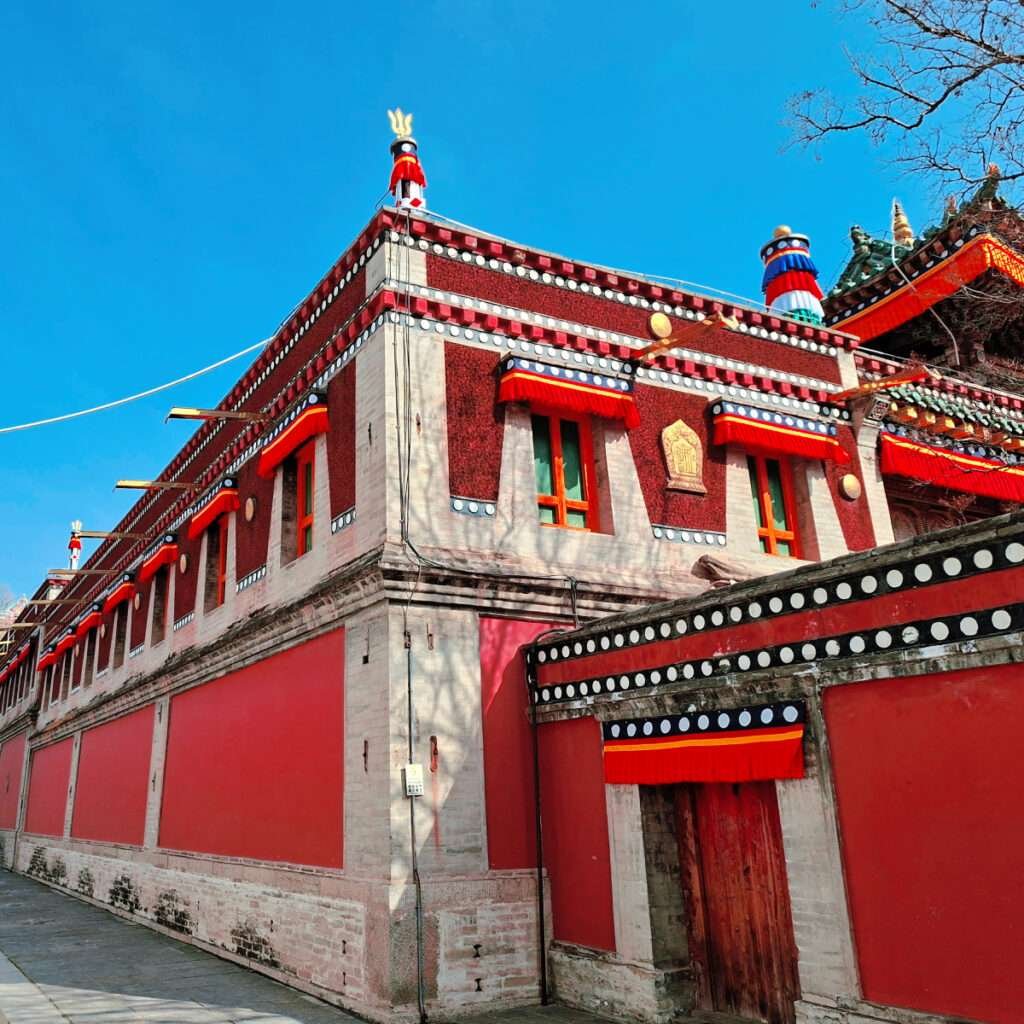
Kumbum Monastery is an important monastery in Tibetan Buddhism located near Xining.
12/02/2026
Ruth Silbermayr
Author
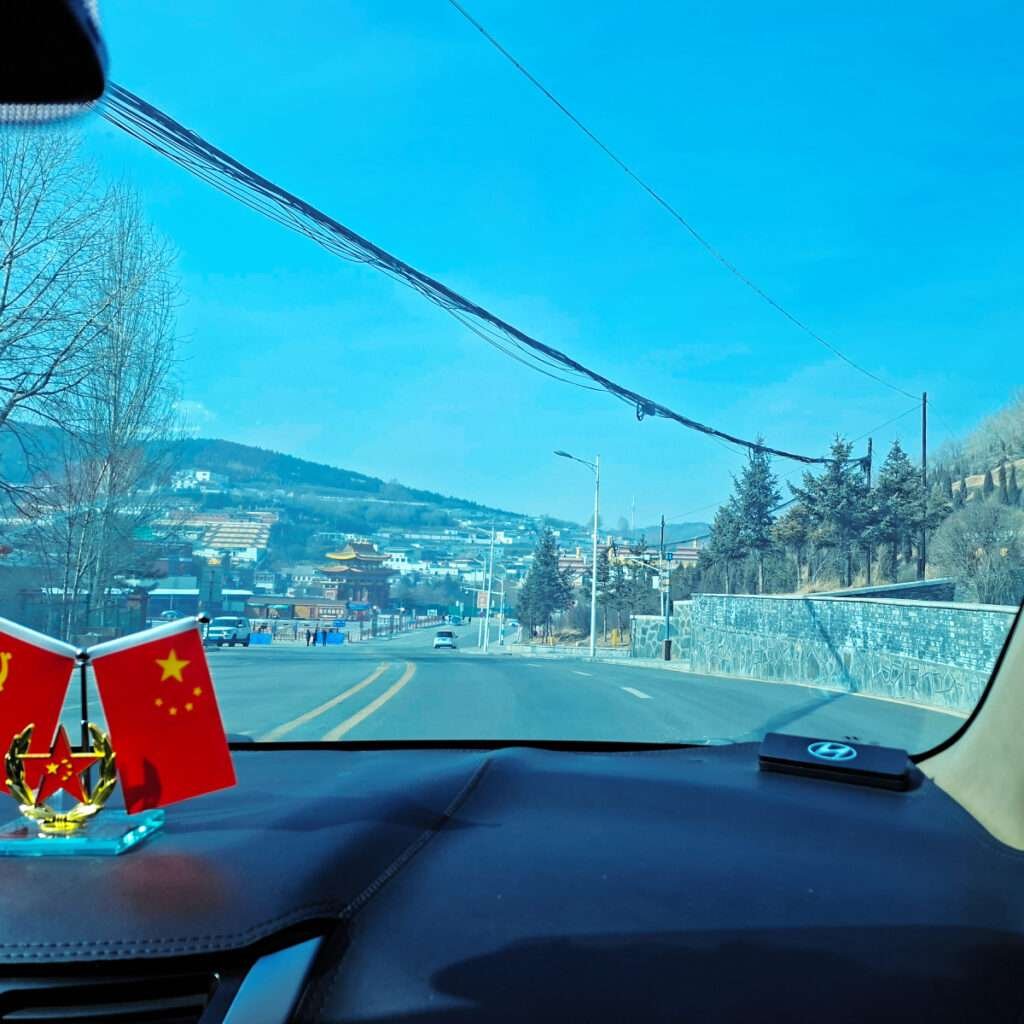
I headed to Kumbum Monastery right after getting off my train in Xining. I had initially merely planned to ask drivers near the train station if there were any buses going to Labrang Monastery in southern Gansu Province the next day, and I found one who offered to take me to Kumbum Monastery near Xining for 180 yuan both ways.
I took the opportunity to visit this monastery, since I have always been fascinated by Tibetan-style buildings.
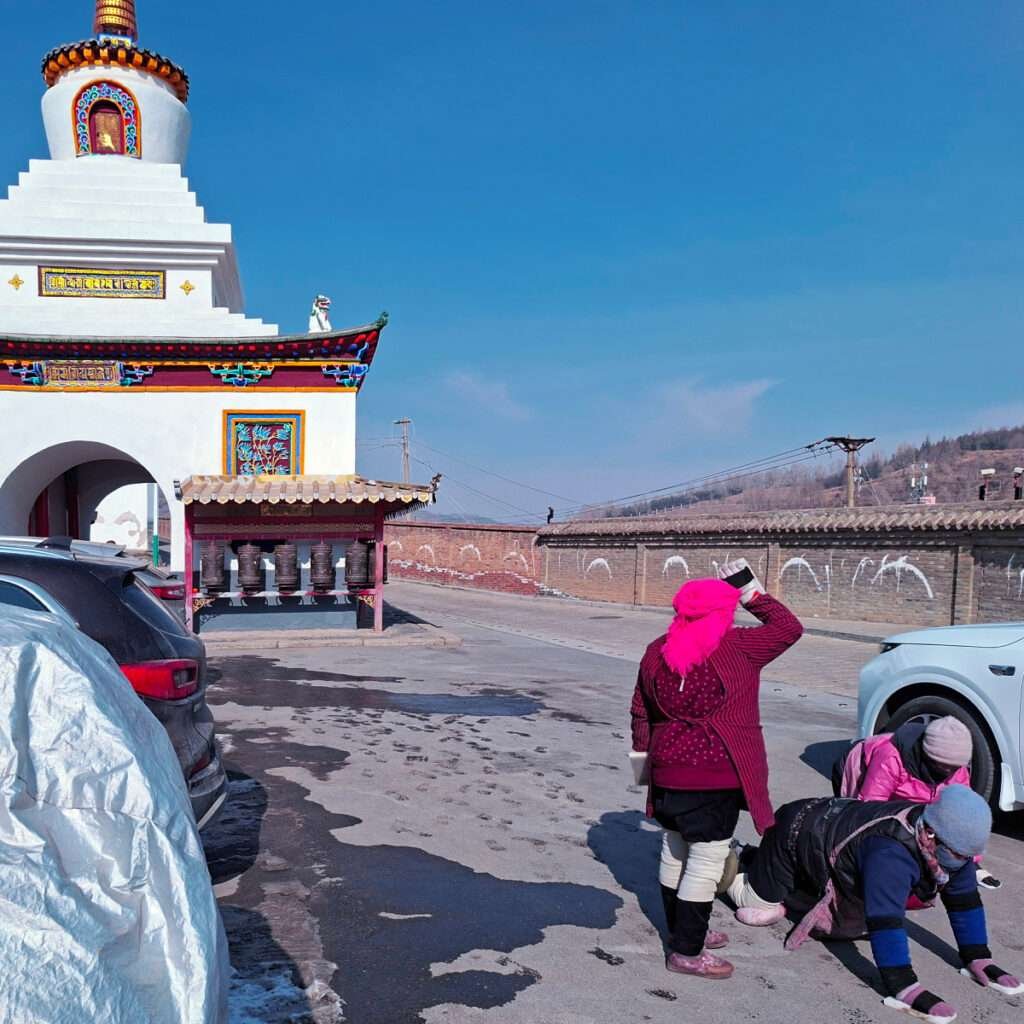
To be honest, this monastery should only be visited if you have enough time on your hands. It is good enough to visit if you’ve never seen a Tibetan-style monastery, how people pray there, and what rites they follow. People getting down on their knees to move a few steps forward and then getting back up again may be a curious sight the first time around, and the ones I saw doing so belonged to the Tibetan minority. Many Tibetans are very religious, believe in Buddhism, and follow Buddhist traditions.
Prostration—as seen at Kumbum Monastery—involves dropping the body to the floor, moving forward, and then getting up again. After a few steps, Buddhists usually repeat this movement. They do so throughout their “walk,” and it looks quite strenuous, I have to say, but it must be quite healthy for the body, as it resembles exercise, even if this is not its main purpose.
People of all ages can be seen doing this, except perhaps babies and 1.5-year-old toddlers. Prostration is an act similar to prayer that represents one’s devotion to the Buddha.
Kumbum Monastery was first built in 1583 and has an entrance fee of 10 yuan (at least at the time of my visit). A Buddhist monk was working at the checkout in the building near the entrance where the fee was charged—a curious sight.
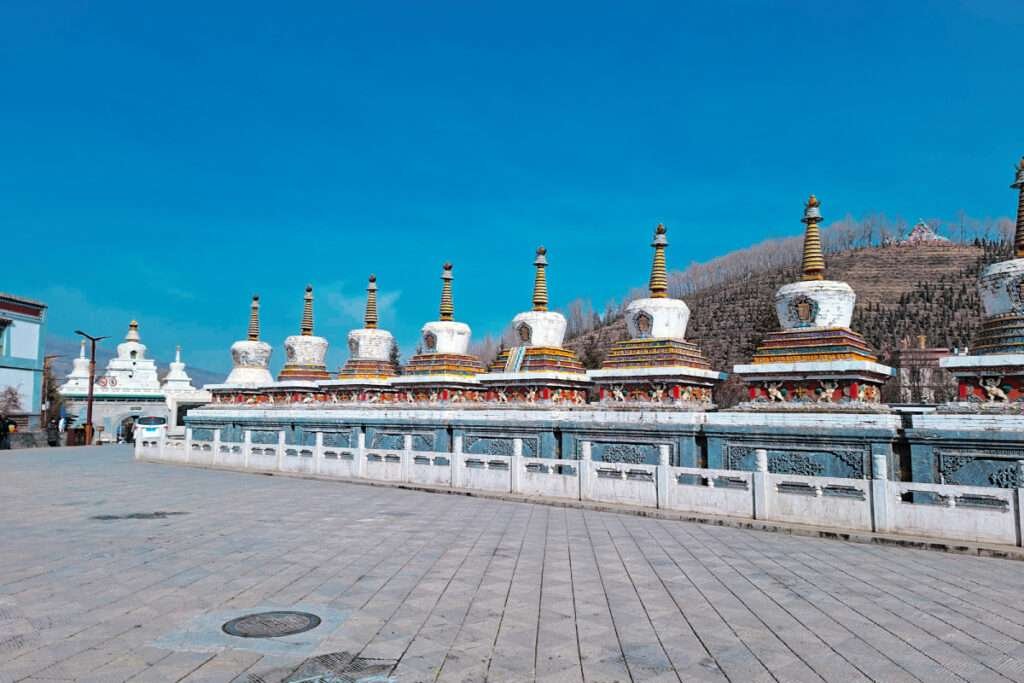
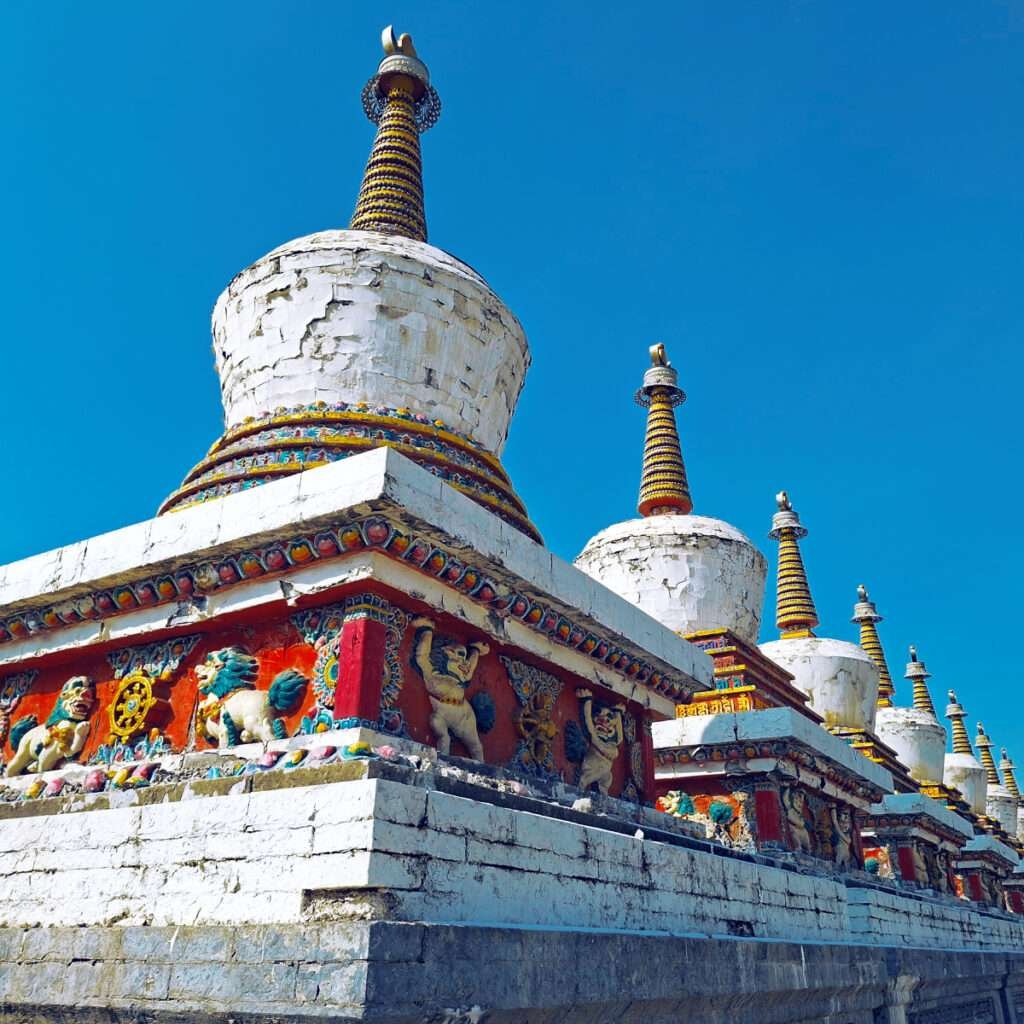
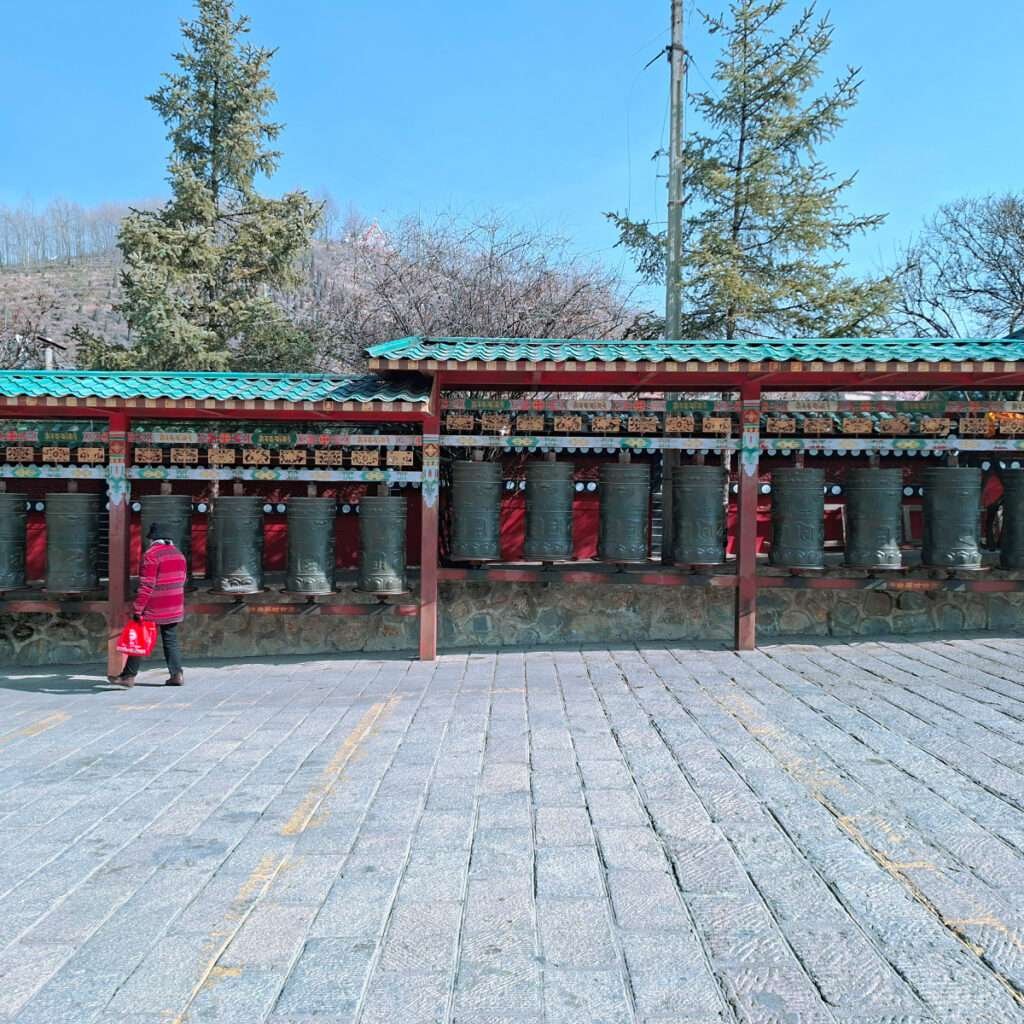
The monastery featured a few small temple halls, several stupas, and prayer wheels. These are usually located near an entrance or exit, and people touch and rotate the wheels while walking past them.
All the wheels are touched and turned, and this act is said to stand in for reciting mantras, since mantras are written on the wheels and are believed to be released through their turning.
Turning a wheel once is supposed to represent many recited mantras, meaning one does not need to recite as many when simply turning the wheels instead.
One temple featured many skulls of different local animals—no photos were allowed. This was related to Tibetan shamanism, I assume, and I found the temple very curious and unique. The skulls were located on the second floor, all facing the courtyard on an open balcony so people could see them from the ground floor.
Like other monasteries in the area, this monastery belongs to the Gelug sect and is of vital importance in Tibetan Buddhism. It was the birthplace of Tsongkhapa (1357–1419), the founder of the Gelug sect.
The monastery also features a Tibetan medicine hospital that caters to people suffering from high altitude sickness (offering oxygen for visitors to breathe). I believe that monks can also visit it when they are sick. There were a few Buddhist monks on the grounds, though not as many as at Labrang Monastery, which was much larger and more impressive.