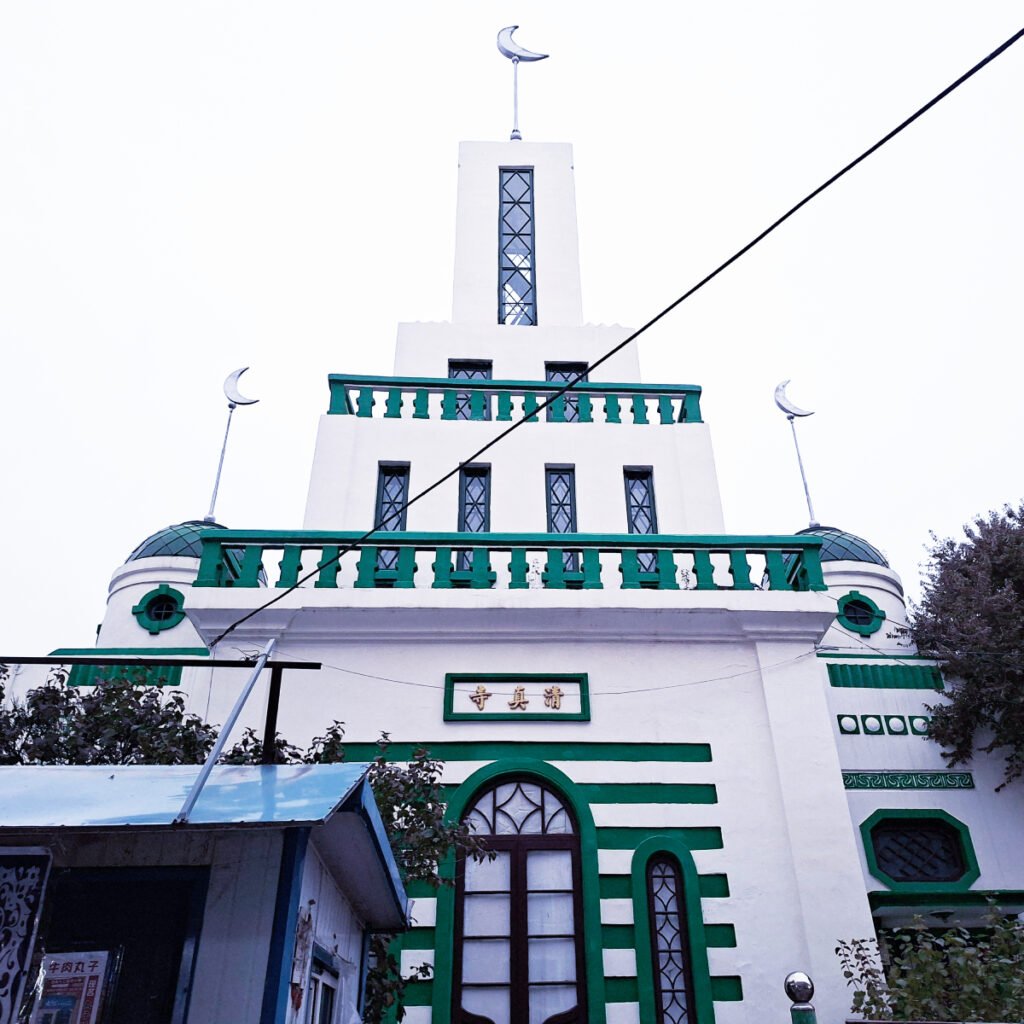
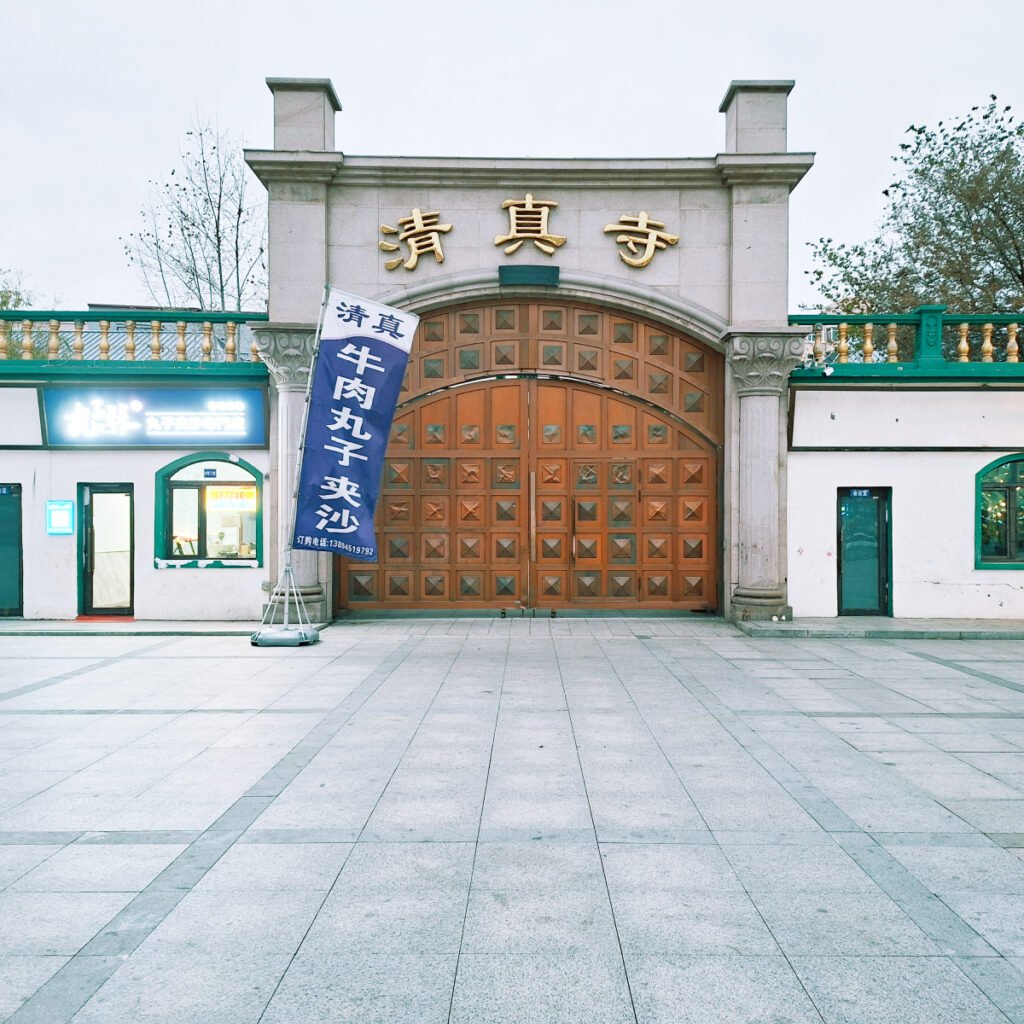
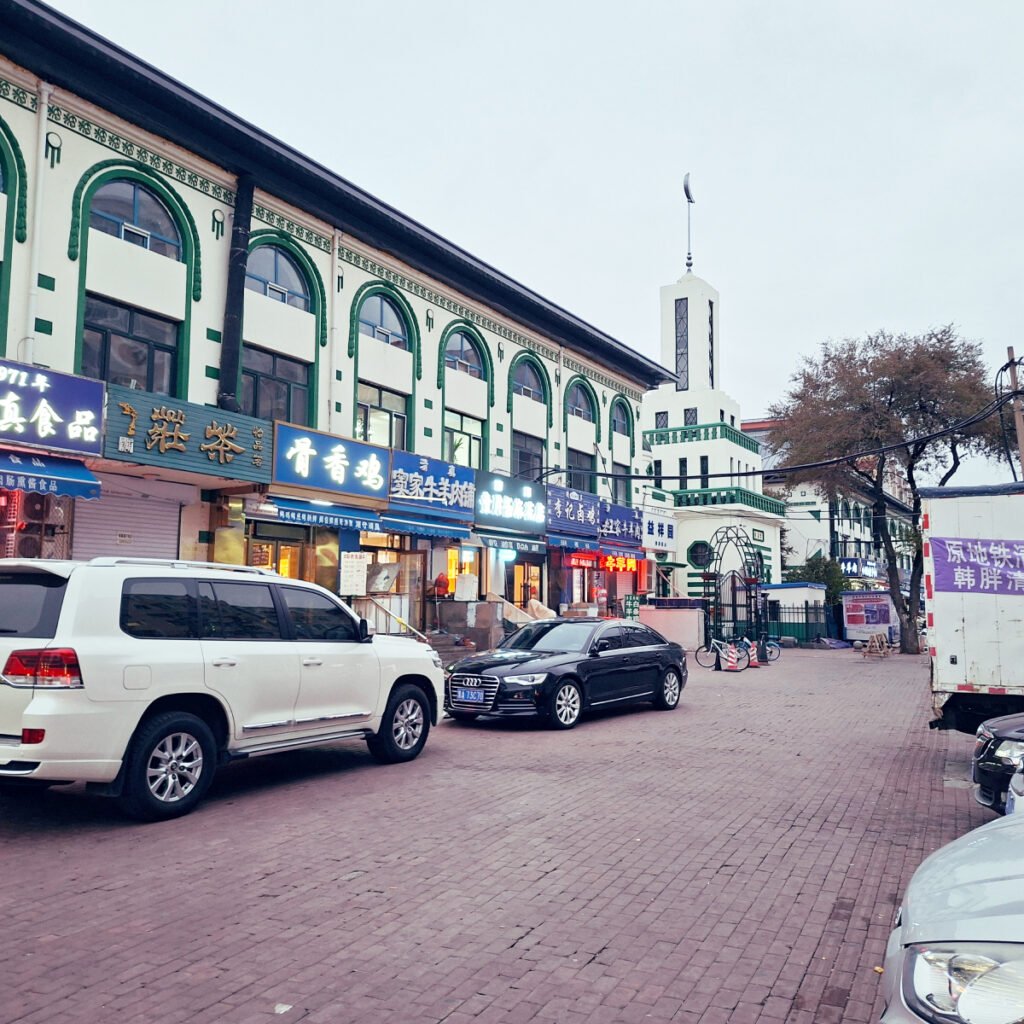
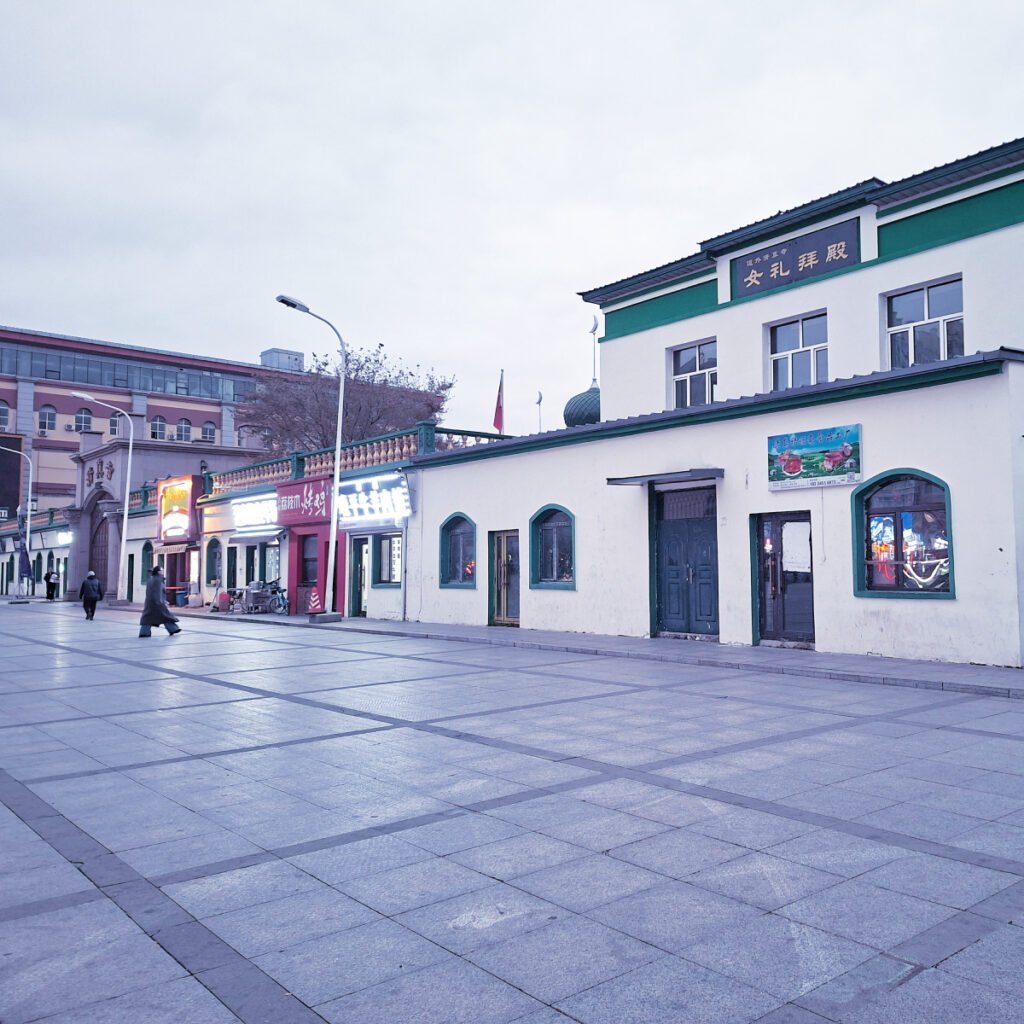
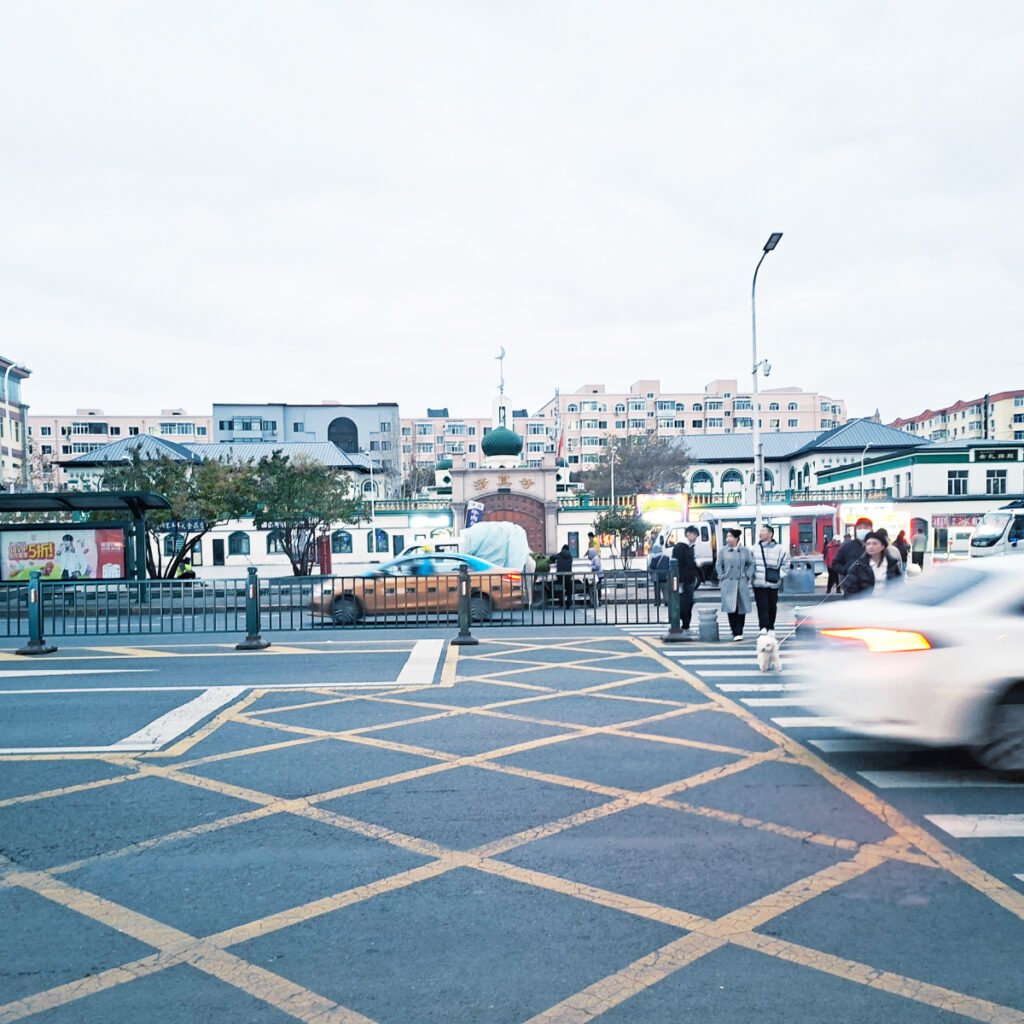
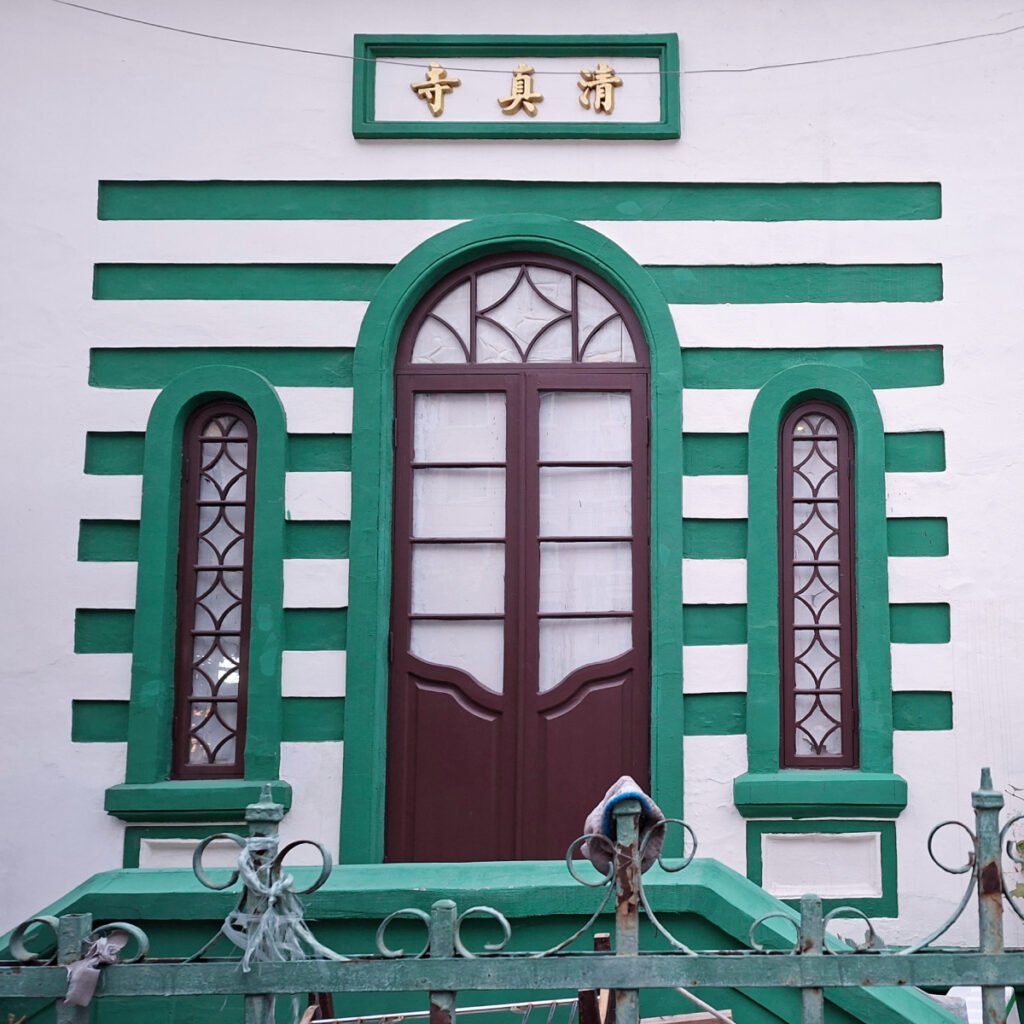
The Harbin Mosque was built in 1897, only shortly before the end of the Qing dynasty 14 years later.
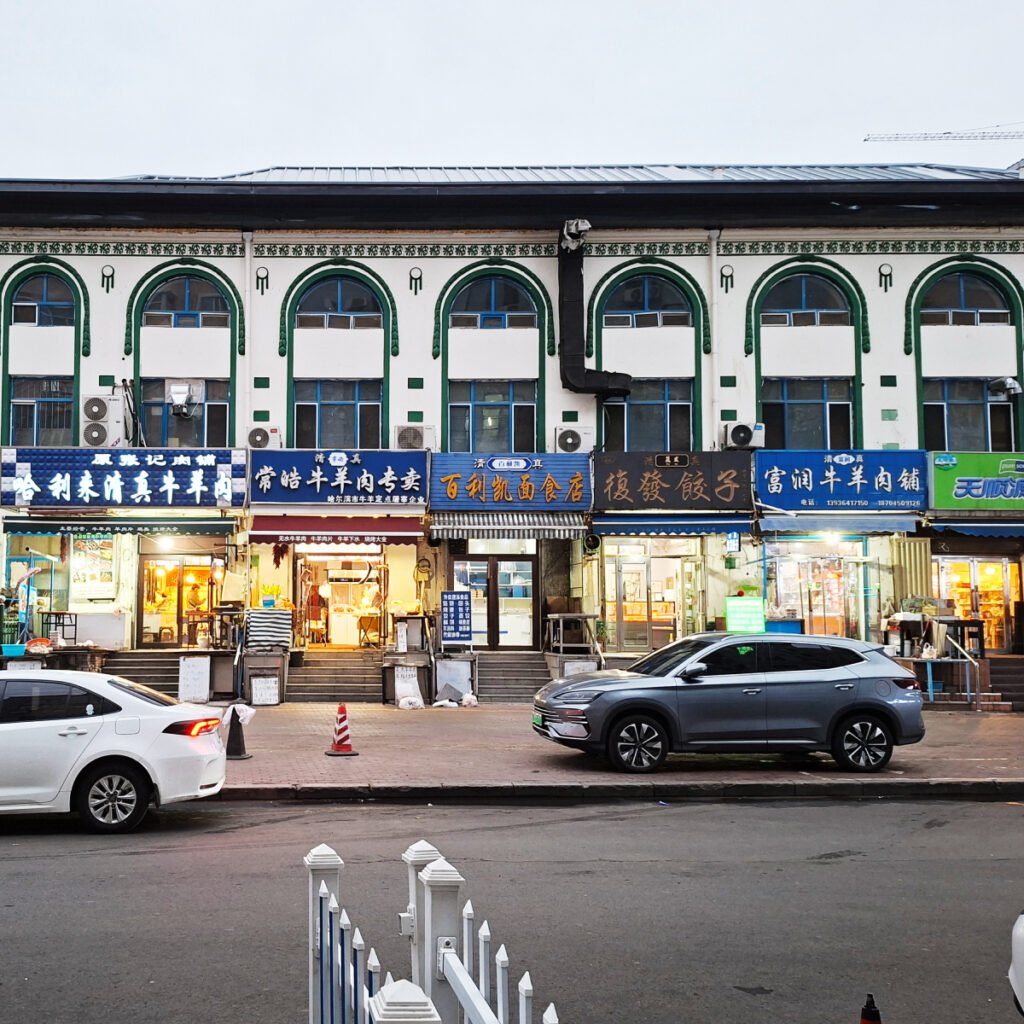
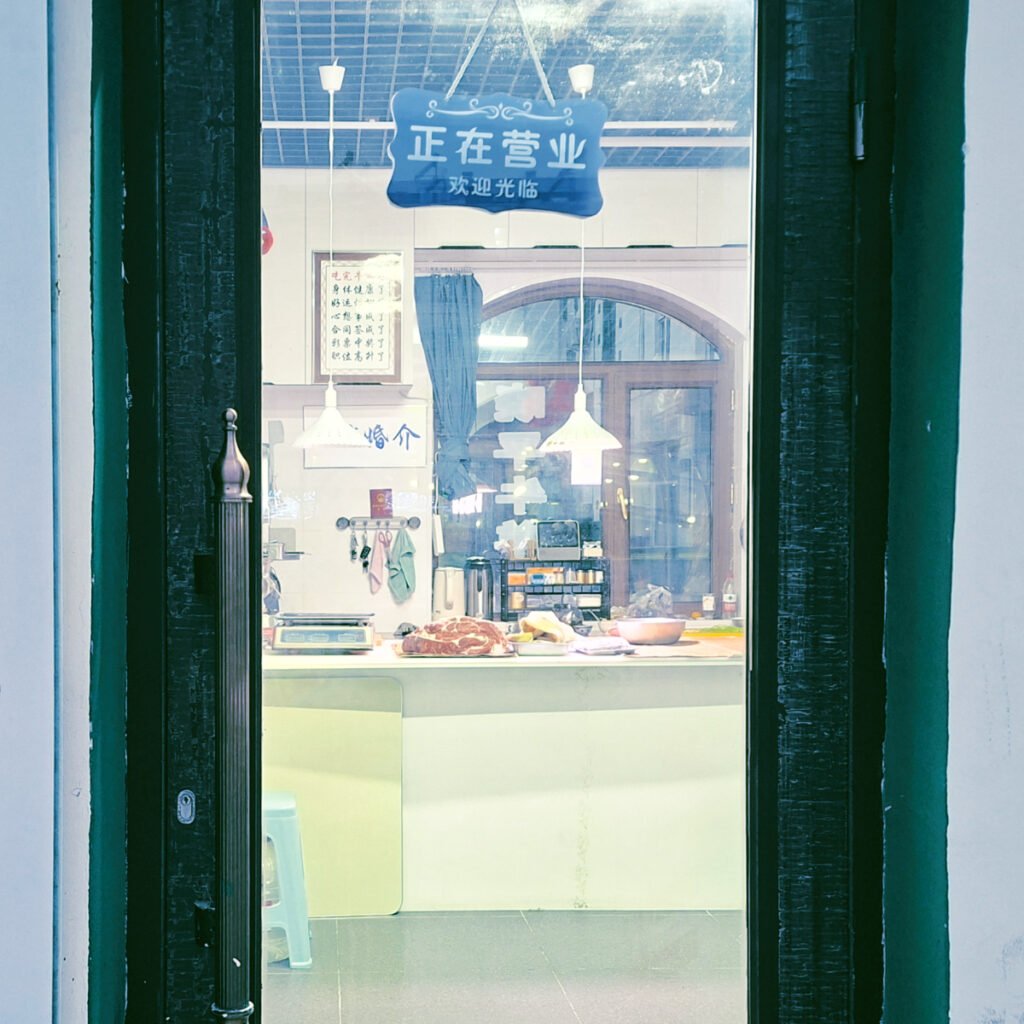
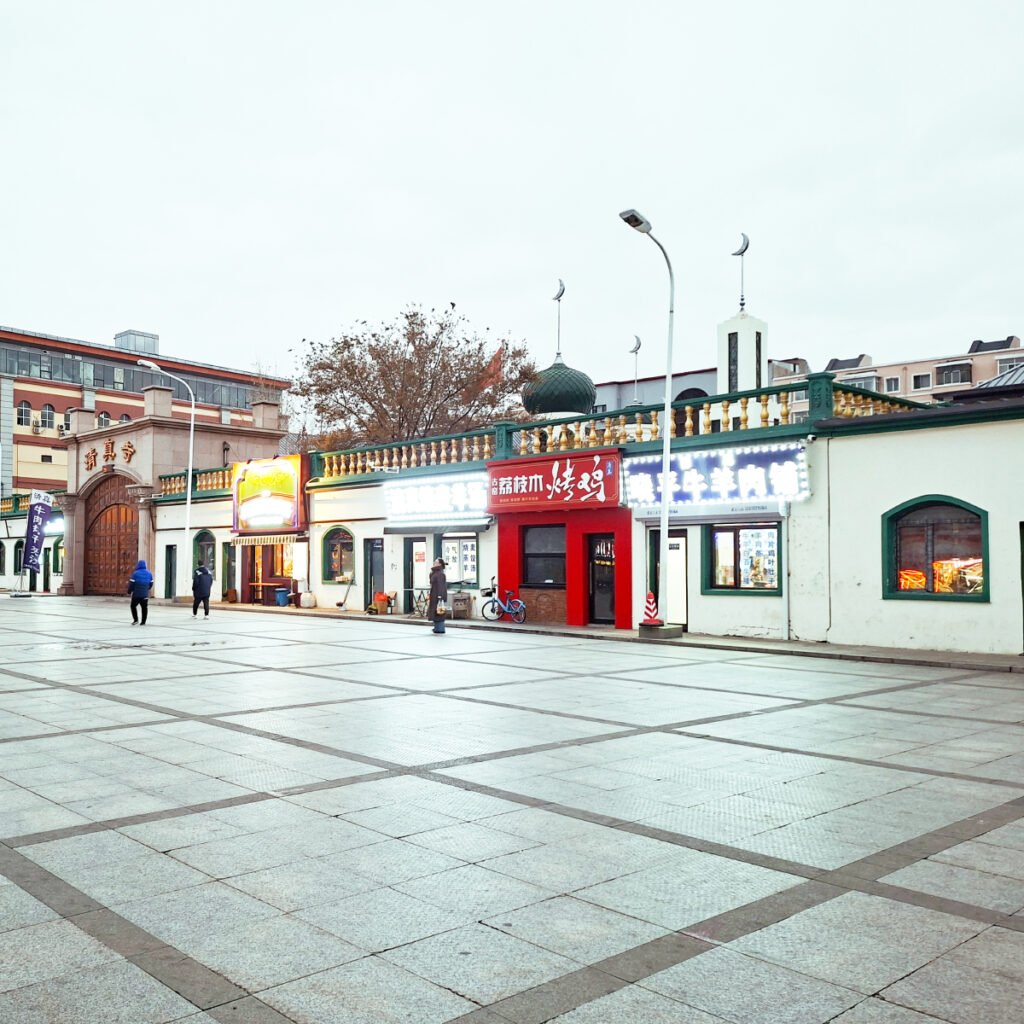
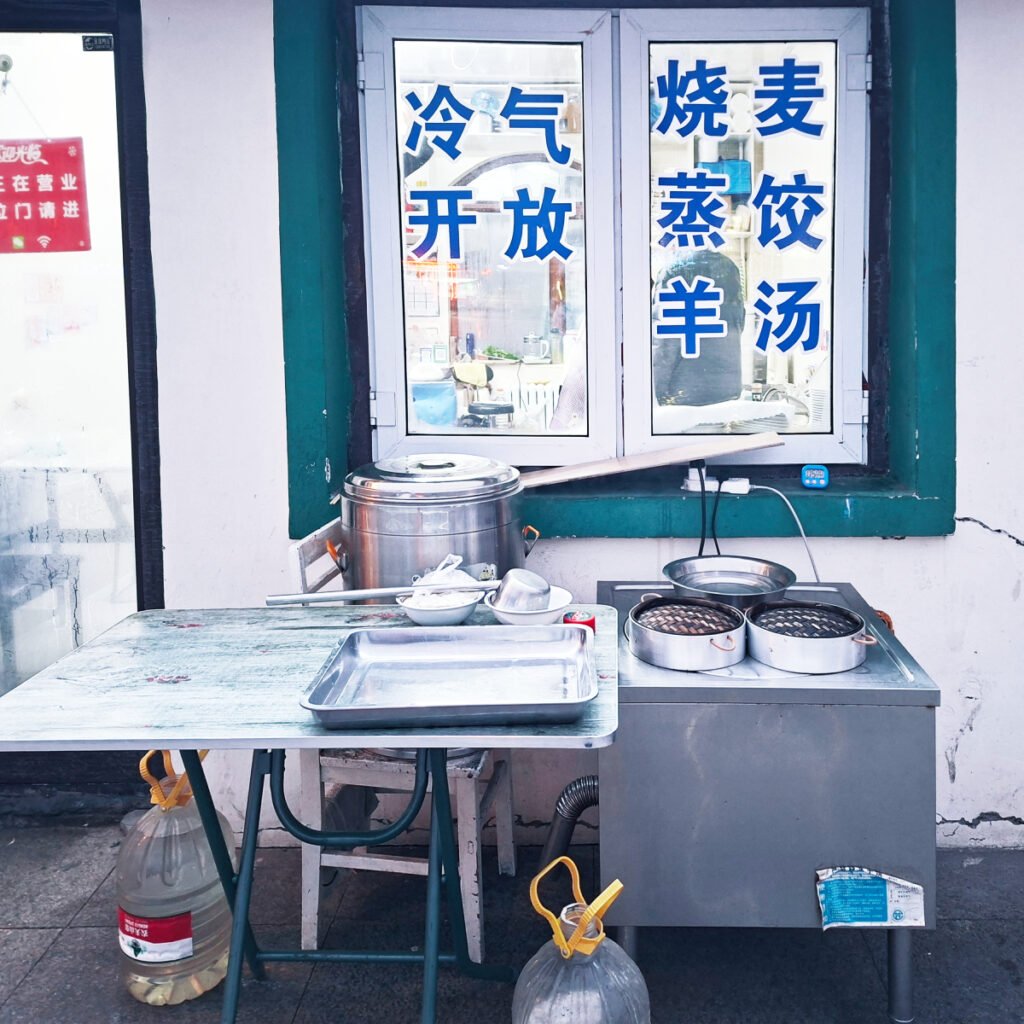
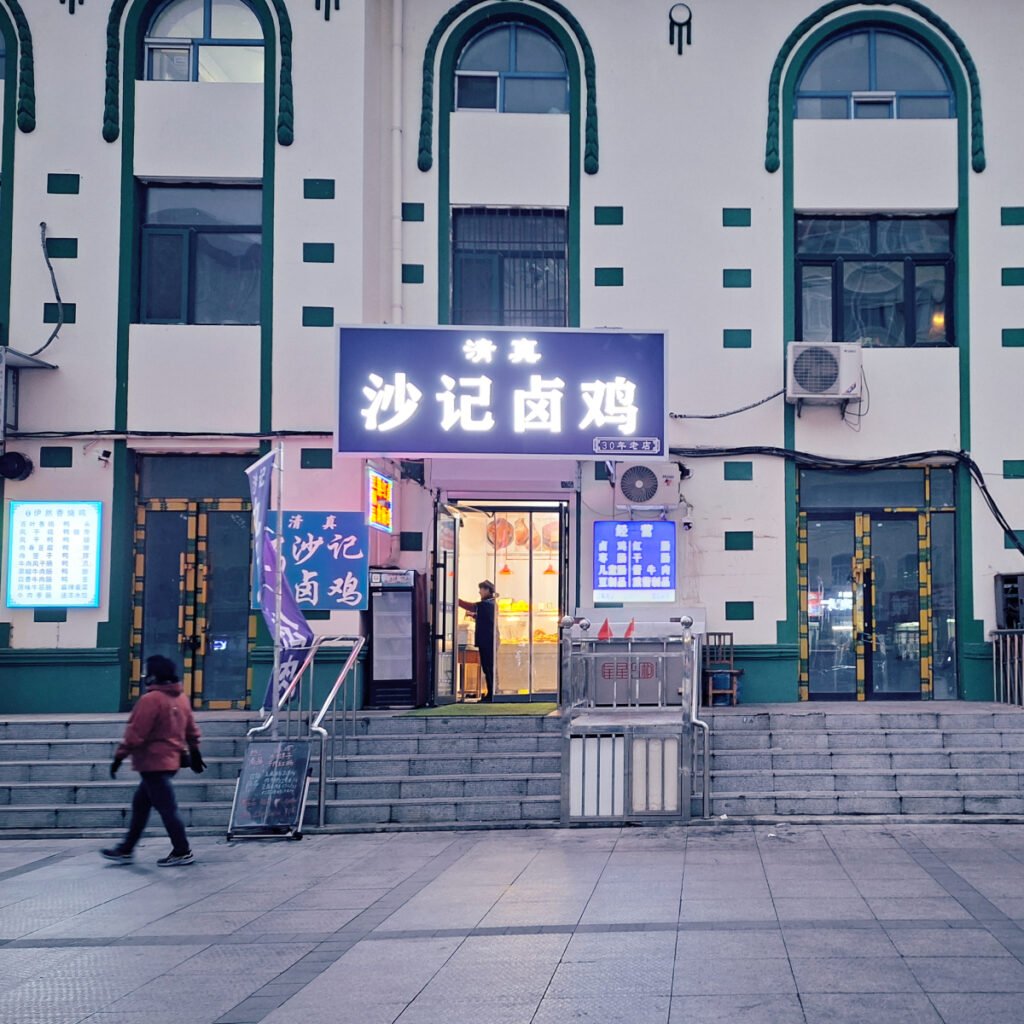
It is surrounded by white-green buildings with shops selling halal food (these shops usually have a sign saying “清真,” which means halal), such as meat and various breads. This extension is not as old as the mosque itself and was added in 2003.
Halal food refers to the dietary practices of Muslim minority groups in China (such as the Uighur or Hui), which exclude alcohol and pork and require that meat be slaughtered in a particular manner. In Xinjiang, the meat used in many dishes is often mutton, and mutton skewers are especially common.
Beef is a popular halal ingredient in other regions, and Muslim lamian (拉面)—long, thin hand-pulled wheat noodles served in a broth with thin slices of meat, spring onions, and cilantro—are enjoyed by Muslims and non-Muslims alike across China.
Although many Muslims in Xinjiang follow halal dietary rules strictly, some areas in Northern Xinjiang—such as Turpan, which is known for having more liberal or less strict Muslim practices—may still have people who drink beer, unlike certain southern regions of Xinjiang where observance tends to be more conservative.
The Harbin Mosque is the largest mosque in Heilongjiang province and can be reached by subway (the station is called Harbin Mosque, 清真寺).
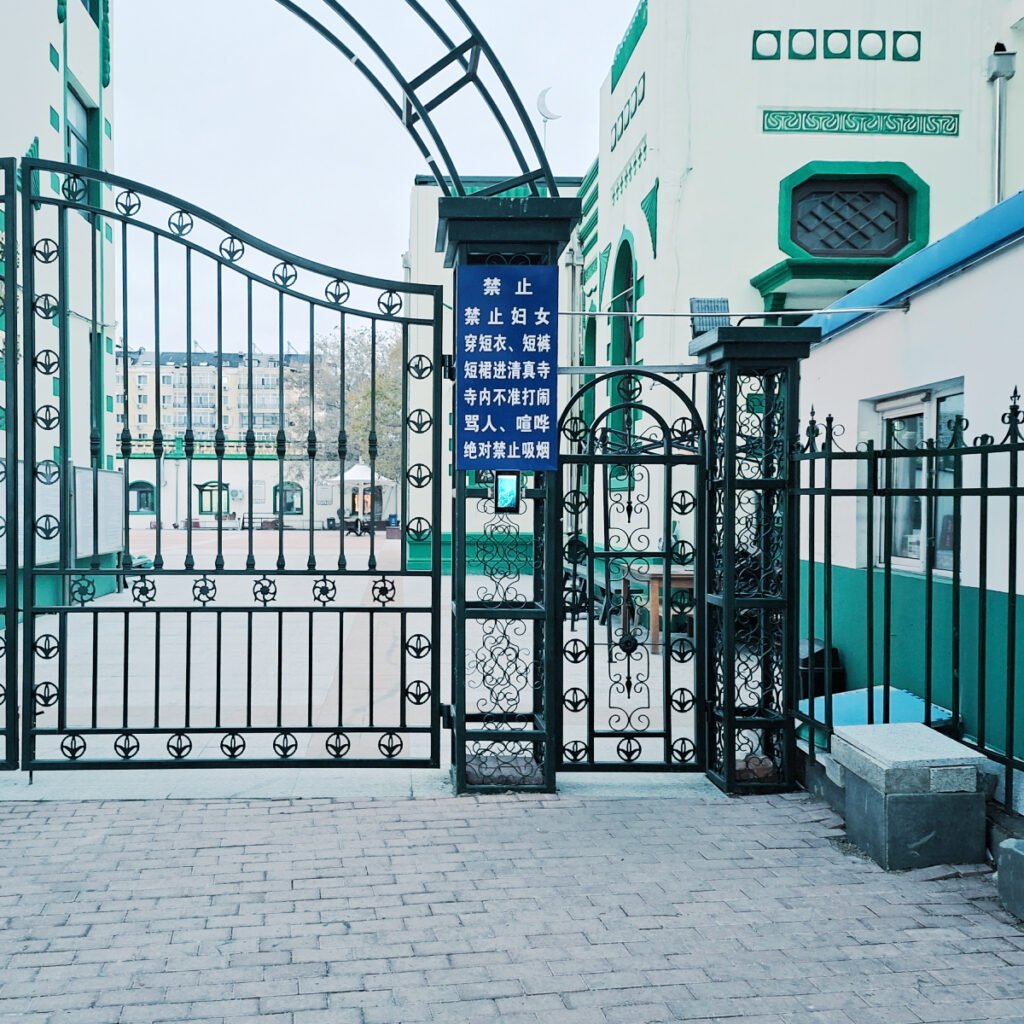
I found the building, with its white walls and green decoration, very beautiful, and the surrounding square makes for a pleasant visit, allowing you to walk around the area and view the mosque from the outside. I am not sure if it is open to the general public, but if you want to enter, you must follow the rules for entering a mosque—such as avoiding short clothing for women (e.g., short dresses, skirts, or shorts) and dressing modestly.
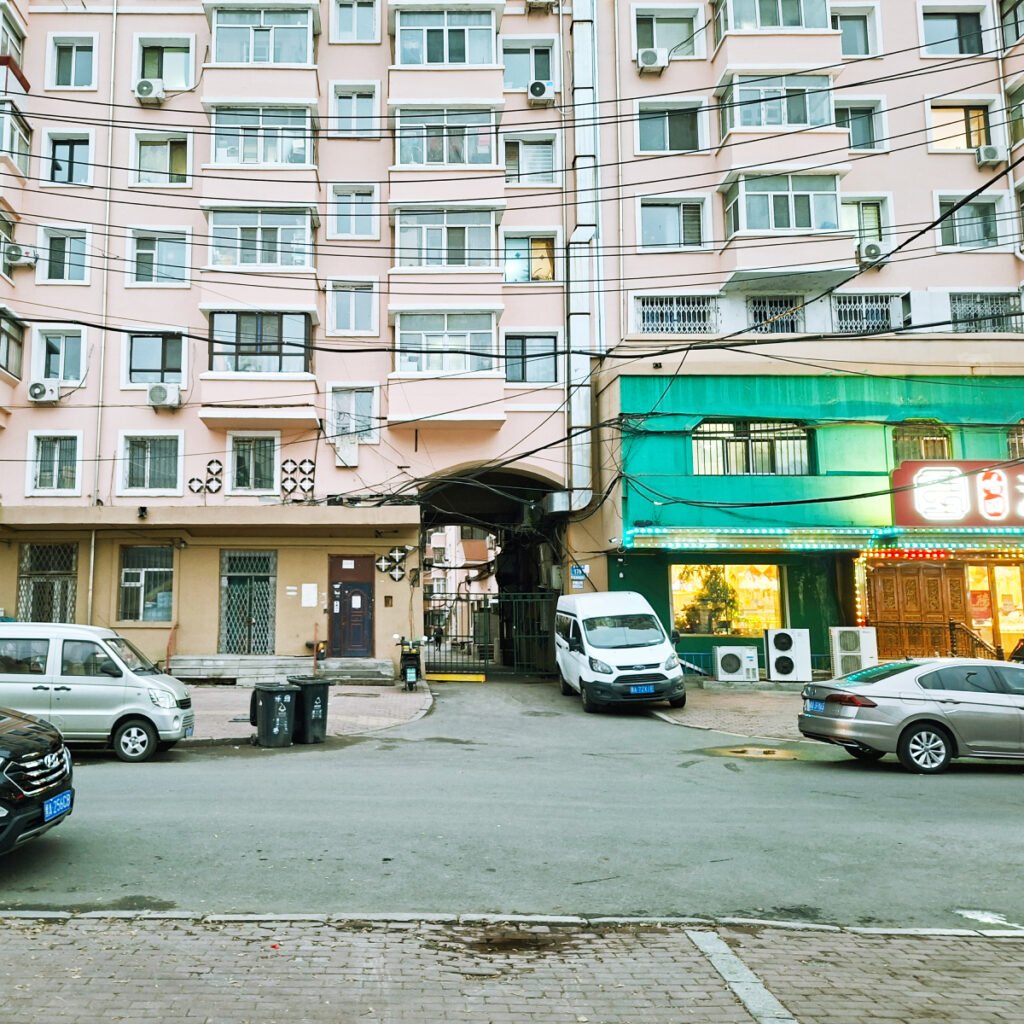
Here are a few more pictures showing the Mosque and the surrounding buildings: